Showing posts with label scholarships. Show all posts

Tuesday, 9 July 2019

We’ve been funded! ARC Linkage - Optimising plant populations for ecological restoration and resilience

We are very happy to report another successful ARC Linkage grant application.

LP180100721: Optimising plant populations for ecological restoration and resilience

Dr Richard Edwards; Professor Justin Borevitz; Dr Jason Bragg; Dr Maurizio Rossetto; Dr Brett Summerell; Dr Marlien van der Merwe

When choosing individual plants for restoration populations, there is potentially a trade-off between maximising genetic diversity (‘adaptability’) and selection for desirable properties (‘adaptation’). This project aims to develop pioneering methods to quantify this trade-off, and facilitate the design of optimised populations, with a focus on two Australian rainforest trees that are being impacted by myrtle rust infection: Rhodamnia argentea and Rhodamnia rubescens. By studying the genetic variation in each species, and how this relates to myrtle rust resistance and climate, this project aims to design populations that are genetically diverse, maximally resistant to myrtle rust, and adapted to future climate.

We are collaborating with the Royal Botanic Garden and Domain Trust to apply genomics to challenges of conservation for rainforest trees in the face of climate change and invasive pathogens.

There will be job and studentship opportunities associated with this grant, so watch this space (or get in touch)!

Thursday, 6 June 2019

PhD available: Developing genomic resources to advance the molecular ecology of invasions

Expressions of interest are now open for a Scientia PhD Scholarship, in collaboration between the Edwards Lab, Lee Ann Rollins, and Marc Wilkins:

Developing genomic resources to advance the molecular ecology of invasions

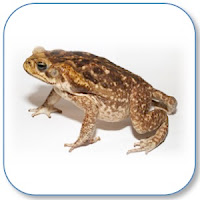
These are exciting four-year scholarships to start in 2020 with full fees covered, a generous stipend, and career development funds. Please click on the toad or get in touch if you want to know more!

Closing date: 12 July 2019.
Location: University of New South Wales, Sydney, Australia

PROJECT DESCRIPTION

Invasive species pose a major challenge to biodiversity worldwide but also provide the unique opportunity to study evolution in action. Rapid changes are often associated with invaders’ introduction to novel environments. Understanding how molecular mechanisms drive these changes enables the creation of innovative solutions to controlling invasions and managing native species’ response to climatic change. The iconic Australian cane toad invasion is one of the best studied globally and is an emerging model for invasion genomics. This project will use whole genome sequencing, novel bioinformatic approaches and proteomics to identify molecular drivers of invasion success.

IDEAL CANDIDATE

We seek a highly motivated, curiosity-driven student with an interest in evolutionary biology and bioinformatics, who would like to understand why invasive species flourish. Ideally, candidates will have demonstrated computer literacy and be willing to learn new approaches to analysing genomic and proteomic data. Strong writing skills will be an asset. We will consider applicants coming from either a computing background who want to work in evolutionary biology or those with evolutionary biology backgrounds and a keen interest in bioinformatics. The supervisory team offer a high level of support in the fields of evolutionary biology, genomics, proteomics and bioinformatics. This project provides the opportunity for the successful applicant to develop the most current skills and build a successful career in these fields while contributing to solutions for two major global issues: loss of biodiversity and species’ response to climate change.

SUPERVISORY TEAM:

  • Dr Lee Ann Rollins, UNSW Scientia Fellow
  • Dr Richard Edwards, Senior Lecturer in Genomics & Bioinformatics
  • Prof Marc Wilkins, Professor of Systems Biology

HOW TO APPLY:

Complete an expression of interest at: https://www.scientia.unsw.edu.au/scientia-phd-scholarships/developing-genomic-resources-advance-molecular-ecology-invasions

The strongest expressions will receive an invitation to submit a full application to the scholarship competition.

CONTACT

To discuss the project and related opportunities, please contact Lee Ann Rollins (l.rollins[at]unsw.edu.au / @rollins_lee) or Rich Edwards (richard.edwards[at]unsw.edu.au / @slimsuite).

Monday, 9 January 2017

Jiehao Wang (SVRS Student)

Jiehao Wang is a third year Bachelor of Advanced Science (Honours) undergraduate, majoring in pathology and pharmacology. He joined the Edwards Lab in 2016 on a second semester School of Biotechnology and Biomolecular Sciences (BABS) research scholarship. After finishing the project, Jiehao continued to work with Dr Richard Edwards in the summer of 2017 under the BABS school Summer Vacation Research Scholarship (SVRS) as an intern. During his time at the laboratory, he worked on the comparative yeast genomics project in 2016, and helped to identify Ty elements (Transposable Yeast elements) in genome assemblies in 2017.

Academic Qualifications

Expected 2018, Bachelor of Advanced Science (Honours) in Pathology and Pharmacology - University of New South Wales, Sydney, Australia.

[LinkedIn]

Thursday, 25 August 2016

Honours and undergrad research opportunities

Honours

BABS are currently recruiting the next cohort of Honours students for Semester 1 2017. As usual, the EdwardsLab is looking to recruit enthusiastic students in two main areas:

1. Functional genomics using long-read PacBio sequencing. We are particularly keen to get a student to work on either (a) aspects of our ARC Linkage grant, investigating the evolution of a novel biochemical pathway in yeast, or (b) de novo whole genome sequencing of the cane toad. We also have a number of projects with bacteria for those with a keen interest in microbiology. In each case, the lab is collaborating with experts in the relevant organisms.

2. Applying biological sequence analysis and molecular evolution to study the molecular basis of protein-protein interactions. The main lab software, SLiMSuite has a number of improvements and developments that would benefit from some dedicated attention from a research student. We are also looking for someone who might want to help develop the lab servers.

More details of honours can be found on the BABS website, or please get in touch if you have questions about specific projects. Applications from non-UNSW students are also encouraged.

* BABS are also running an Honours information and networking night on 16th September.*

Summer Vacation Research Scholarships

BABS is once again running its highly successful Summer Vacation Research Scholarship (SVRS) scheme and the EdwardsLab are looking to take on one or two students in the same areas as indicated above.

How to apply

We do not yet have a specific undergraduate application form but it is helpful if you can follow the PhD application process and just make it clear that you are interested in Honours or SVRS. As well as helping select between applicants, this form is also useful for me to make sure that students are assigned an appropriate project.

Monday, 23 February 2015

Deadline for Semester 2 international PhD studentships

The UNSW deadline for Semester 2 PhD applications for International Students is 26 Feb 2015. To allow sufficient time for assessment and processing, any Edwards Lab applications must be received TODAY (23 Feb 2015) for Semester 2, 2015. (Supported applicants will still need to make a UNSW application for the deadline.) Any applications received after this date will be considered for Semester 1, 2016. Unfortunately, these things need to be planned and researched a long time in advance!

Wednesday, 21 January 2015

How to apply for a PhD in the Edwards Lab

Choosing the right lab and project in which to do a PhD is one of the most important decisions in the life of a scientist. It is in the best interests of all concerned to make sure that there is a good fit. To this end, there is now a lab PhD application form for all interested applicants. (Click the link or image to download.)

The purpose of the form is two-fold:

  1. To assess the skills, experience, and interests of applicants.
  2. To assess key CV points for those intending to apply for UNSW Scholarships.

The lab does not currently have any funding for students but I am happy to receive applications from funded students and students wishing to apply for UNSW scholarships or other schemes. Please check the UNSW key dates page for application deadlines etc. - students may want to delay their application and strengthen their experience/CV in the meantime.

Informal enquiries are welcome but generic “Dear Sir/Professor” emails will be ignored. Please read this blog post, “How (not) to apply for a PhD”, before applying.

Note: Applicants with insufficient bioinformatics experience will not be considered (see below). It is simply too much of a risk (for both student and supervisor) to take such a student on, as not everyone takes to purely computational work. You must also demonstrate good communication in English, which includes all email communication.

Available projects

There are no specific projects on offer and PhD research topics will ultimately be a collaborative decision based on the skills and interests of the student as well as the current status of various research in the lab. Available projects range from algorithm and bioinformatics resource development to primarily data analysis projects. Examples include, but are not limited to:

  • Yeast genomics using long-read PacBio sequencing. We are particularly keen to get a student to work on aspects of our ARC Linkage grant, investigating the evolution of a novel biochemical pathway in yeast.
  • De novo whole genome sequencing and assembly of the cane toad.
  • The role of gene duplication in the evolution of snakes.
  • The development of diploid genome assembly analysis tools.
  • Development of network approaches to understanding SLiM-mediated protein-protein interactions. (Strong maths required.)
  • Predictions of molecular mimicry from host-pathogen interaction data.
  • Exploring the role of SLiM mutations in cancer and other human diseases.
  • Development of a database of SLiM predictions.
  • Benchmarking, optimising and extending SLiM discovery tools.

There is no single perfect applicant profile: please provide a frank and honest appraisal of your interests, skills and future goals in your application.

Submitting your application

Completed applications forms should be emailed with a CV and degree transcript to richard.edwards@unsw.edu.au. Please name each file with your family name, initials and document type, e.g.

EdwardsRJ.Application.docx
EdwardsRJ.CV.pdf
EdwardsRJ.Transcript.pdf
PDFs are preferred but MS Word *.docx files are also OK. Remember: attention to detail is very important in bioinformatics. Boxes in the application form may be resized but please keep answers succinct; you will be judged on the quality of your writing.

Note: Applicants will also need to submit a formal application through the UNSW Graduate Research School. This is not recommended until an agreement has been made to sponsor your application. Please also note that any agreement to sponsor your application is not agreement to take you on as a student. The final decision regarding supervision will not be made until after all of the applications have been received and processed by UNSW.

Masters and undergraduate project applicants

Applicants for undergraduate projects (Honours/SVRS) or Masters programs should use the same form but indicate the program that they are applying for.

Bioinformatics Experience Requirements

All projects are 100% computational. To be considered as an international PhD applicant, you must have completed at least one 100% computational project as part of your undergrad or masters, or have equivalent computational experience (e.g. work placement as a programmer or data analyst). Taught courses are not sufficient at this level unless you can also provide some evidence of skill at scripting/programming, such as an extensive body of work at Rosalind. Unfortunately, the risks are simply too high otherwise.