Showing posts with label evolution. Show all posts

Thursday, 13 February 2025

Small but mitey: a gapless telomere-to-telomere assembly of an unidentified mite with a streamlined genome

A few years ago, we accidentally sequenced an interesting mite when making the Rhodamnia argentea reference genome. We don’t really know what it is, but thanks to nanopore sequencing and a low repeat content, we produced a gapless telomere-to-telomere assembly! As an unfunded passion project, it’s been ticking along in the background since then, but is now published in Genome Biology and Evolution.

One of the most interesting aspects of the paper is the genome reduction - despite being a complete nuclear genome, the assembly is under 35 megabases! This is a couple of orders of magnitude smaller than many other arachnid genomes.

We are yet to do a comprehensive analysis, but just looking at the core set of expected arachnid genes, as defined by BUSCO (e.g. single-copy genes that are expected to be present in most arachnid genomes) revealed that about a third of them were missing. (This low completeness was partly responsible for the time taken to fully recognised and deal with the contamination.) Tellingly, the closest sequenced relatives of this mite also have reduced genomes and are missing many of the same BUSCO genes, revealing a long history of gene loss.

The proportion of “Duplicated” BUSCO genes is also surprisingly high at 4.5%. These are genuine duplications, with consistent diploid read depths and many of the pairs present on both chromosomes. It will be interesting to see if these duplications are replacing some of the lost functions from the other genes, or are novel genes behind such a specialised lifestyle. As an unfunded passion project, it was beyond scope to investigate the full annotation as part of this paper, but get in touch if you would be interested to do this!

Edwards RJ, Chen SH, Halliday B & Bragg JG (2025): Small but mitey: a gapless telomere-to-telomere assembly of an unidentified mite with a streamlined genome. Genome Biology and Evolution Feb 13. [Gen Biol Evol] [PubMed]

Abstract

A draft assembly of the rainforest tree Rhodamnia argentea Benth. (malletwood, Myrtaceae) revealed contaminating DNA sequences that most closely matched those from mites in the family Eriophyidae. Eriophyoid mites are plant parasites that often induce galls or other deformities on their host plants. They are notable for their small size (averaging 200 μm), distinctive four-legged body structure, and heavily streamlined genomes, which are among the smallest known of all arthropods. Contaminating mite sequences were assembled into a high-quality gapless telomere-to-telomere nuclear genome. The entire genome was assembled on two fully contiguous chromosomes, capped with a novel TTTGG or TTTGGTGTTGG telomere sequence, and exhibited clear signs of genome reduction (34.5 Mbp total length, 68.6% arachnid Benchmarking Universal Single-Copy Ortholog completeness). Phylogenomic analysis confirmed that this genome is that of a previously unsequenced eriophyoid mite. Despite its unknown identity, this complete nuclear genome provides a valuable resource to investigate invertebrate genome reduction.

Tuesday, 17 December 2024

#AusEvol2024 - Depth-based correction of gene duplications and losses in genome assemblies

The Australasian Evolution Society conference has always been one of my favourites, due to its laid back culture of inclusivity and kindness. (And low cost!) It therefore feels quite fitting that my last conference as an Aussie academic was AES2024.

This talk was a bit of an update from my AES2021 presentation. This showcased some of the latest additions to DepthKopy, including depth-based copy number correction of genome features, such as rDNA genes, repeat families, or multicopy genes. This includes a feature that classifies multicopy “Duplicated” genes identified by BUSCO as true (biological) or false (artefactual) duplicates. TL/DR version: analysis of draft genome assemblies for 45 species of fish across five different depths/qualities indicates that DepthKopy can correct the copy number and total length of multicopy features to within 10% of the true number. (The lower-quality raw assemblies ranged from a 30% under-estimate to a 60% over-estimate.)

This will be of most importance when low quality draft genomes are included in a comparative genomics analysis. However, even the best genome assemblies appear to have some “collapsed” or duplicated loci where the copy number in the assembly does not accurately reflect the copy number in the genome. DepthKopy is useful for exploring the magnitude of such disparities, and can help to identify and correct specific disrepancies in genes or features of interest.

Thursday, 31 October 2024

BioDiversity Genomics Conference (BG24)

The global BioDiversity Genomics Conference (BG24) was another great success this year. As well as running a session on Marine Vertebrate Genomics, it was particularly rewarding to see some many quality contributions from lab members and alumni.

Biodiversity Genomics in Australasia

Jessica Pearce (UWA): Reconstructing tiger shark history using genomics

Sharks and rays are a clade of high evolutionary, ecological, economic, and cultural significance, and yet they are one of the most threatened taxa groups in the marine environment. Despite this, there remains a lack of molecular resources for this class to assist with their conservation. The tiger shark (Galeocerdo cuvier) is a near threatened, keystone species distributed circumglobally that is under substantial pressure from human impacts, making it a high priority for management worldwide. We sequenced and characterised a reference quality assembly for the tiger shark, the first genome for this family, and used this to dive deeper into the evolution, adaption, and demographic history of this ancient species. We investigated how its effective population size (Ne), genome-wide heterozygosity and inbreeding has changed over time to infer how this species has responded to past global events, and hence potential responses to ongoing and future accumulating threats. This aims to assist in effective management of this high-profile species. 

Katarina Stuart (University of Auckland): Lifetime fitness is correlated more strongly with structural variant than SNP mutational load in a threatened bird species

Conservation genomics is becoming increasingly interested in whether structural variant (SV) information can help the management of threatened species. The functional consequences of SVs are more complex than for single nucleotide polymorphisms (SNPs) and thus may be more likely to contribute to load. While the impacts of SV-specific genetic load may be less consequential for large populations, the interplay between weakened selection and stochastic processes mean that smaller populations, like those of the threatened Aotearoa hihi/New Zealand stitchbird (Notiomystis cincta), may harbour a high SV load. Hihi were once confined to a single remnant population, but have been reestablished into six sanctuaries and reserves, often via secondary bottlenecks, resulting in low genetic diversity, low adaptive potential and inbreeding depression. In this study, we use whole genome resequencing of 30 individuals from the Tiritiri Matangi population to identify the nature and distribution of both SNPs and SVs within this small avian population. We find that SNP and SV individual mutation load is only moderately correlated, likely because SVs arise in regions of high recombination and reduced evolutionary conservation. Finally, we leverage a long-term monitoring dataset of pedigree and fitness data to assess the impact of SNP and SV mutation load on individual fitness, and demonstrate that SV load correlates more strongly than SNP load with lifetime fitness. The results of this study indicate that only examining SNPs neglects important aspects of intraspecific variation, and that studying SVs has direct implications for linking genetic diversity and genetic health to inform management decisions.

Richard Edwards (UWA): Improving Hifiasm assemblies with 20 kb ONT reads

The quality and quantity of genome assembly has improved dramatically over recent years. Many large-scale genome projects assemble HiFi and HiC reads using Hifiasm to produce contiguous phased assemblies, scaffolded to chromosome-level. Nevertheless, HiFi reads are typically under 25 kb and can still struggle to assemble long, low-diversity repeat regions. Obtaining ‘ultra-long’ (100 kb or longer) ONT reads to solve this problem remains a significant challenge due to technical constraints and DNA sample requirements. Here, we explore the utility of using standard ONT long reads (20 kb or more) as ‘ultra-long’ input to improve phased Hifiasm assemblies for 22 species of bony fish (Genome Size, 627 Mb - 1.54 Gb). We also explore whether the new ‘telo-m’ mode in Hifiasm v0.9.0 improves telomere prediction in these species. Incorporating 20+ kb ONT reads (7.8X - 93.5X) significantly increased assembly contiguity. BUSCO completeness was not significantly altered, although there was some re-partitioning of BUSCO genes between phased haplotypes for some species. Improvement did not strongly correlate with read depth (neither HiFi nor ONT), suggesting that the underlying read length distributions and/or specific genome features are more important for determining the outcome. Hifiasm ‘telo-m’ mode significantly increased telomere recovery, assembling over six times the number of gapless telomere-to-telomere chromosomes when combined with incorporation of ONT reads. Verification of how these results translate to the quality and/or ease of curation of final HiC-scaffolded chromosome-level assemblies is ongoing, with a goal to determine whether the additional sample preparation and sequencing in the lab is cost-effective.

Emma de Jong (UWA): High-Quality Genomes for Australian Lutjanidae Species

Lutjanidae (snappers) are highly valued in commercial and recreational fisheries worldwide and some species serve as fisheries indicator species particularly for bioregions in Western Australia. Comprehensive genomic mapping of immune gene families of Lutjanidae species are lacking, but this information can inform understanding disease vulnerability, the impact of environmental stress, improving aquaculture efforts and to provide insights into the health of wild populations. Despite their importance, only 3 out of 113 Lutjanid species currently have available reference genomes, two of which are highly fragmented (>11,000 and >200,000 contigs), impacting studies on gene families relevant to aquaculture. In this study, we present high-quality chromosome-level reference genomes for 14 Australian lutjanid species across seven genera, generated using PacBio HiFi and Dovetail HiC data. We present initial comparative genomic analyses, including immune gene content and chromosomal synteny analyses across species. These analyses provide insights into the genomic architecture and evolutionary relationships within Lutjanidae. Ongoing work aims to comprehensively map and compare the immune gene family repertoire across genera in Lutjanidae, as well as lethrinid species as an outgroup, to determine genus-specific changes in genes (e.g., loss, selection, duplication) important for pathogen detection, antigen presentation, inflammation, and immune memory. These genome assemblies will serve as a foundational resource to the wider scientific community interested in these species.

Research of ECRs who work in biodiversity genomics

Lara Parata (UWA): Genome Evolution in Marine Ray-Finned Fishes

Approximately half of extant vertebrate species are fishes, with more than 30,000 species classified as ray-finned fishes (Actinopterygii). Actinopterygii represent diverse phenotypes, feeding strategies, life history traits and occupy distinct ecological niches, making them an ideal taxa for studying molecular drivers of diversity and adaptation. Despite their diversity, ecological, and economical importance, only 145 Illumina genome assemblies are available for marine Actinopterygii species. In this study we present 250 new marine Actinopterygii genome assemblies generated using Illumina whole genome sequencing and initial results from a large-scale study of these 395 genomes. Using reference-based annotation tools we determine which fish families have unique patterns of gene family frequency / structure (e.g., losses, expansions, contractions), and correlate these with predicted functional signatures to infer biological and ecological adaptations. We identify fish families with distinct rates of change in the gene families present within their genomes (e.g., more losses / expansions or diversity) and associate these patterns with increased rates of diversification or speciation to further elucidate the genomic attributes contributing to ecological success. The results of this work contribute to the growing understanding of fish genome evolution and provide new insights into the evolutionary history and ecological success of marine Actinopterygii.

Thursday, 5 September 2024

Origin and maintenance of large ribosomal RNA gene repeat size in mammals

Our latest paper is out as a Featured Article in the journal Genetics, featuring ONT from both the cane toad and BABS Genome snake genomes. This paper looks at how ribosomal RNA gene repeats (a.k.a. rDNA repeats) have evolved in vertebrates to expand in size in mammals. For something so fundamental to the function of an organism - literally every process of every cell ultimately relies on rRNA - there is surprising diversity. These regions are traditionally hard to assemble with short reads, and still provide challenges for long-read assemblies, so the new era of high-quality long-read assemblies is likely to reveal a lot about their evolution.

  • Macdonald E, Whibley A, Waters PD, Patel H, Edwards RJ & Ganley ARD (2024): Origin and maintenance of large ribosomal RNA gene repeat size in mammals. Genetics 228(1): iyae121 [Genetics] [PubMed]

Abstract

The genes encoding ribosomal RNA are highly conserved across life and in almost all eukaryotes are present in large tandem repeat arrays called the rDNA. rDNA repeat unit size is conserved across most eukaryotes but has expanded dramatically in mammals, principally through the expansion of the intergenic spacer region that separates adjacent rRNA coding regions. Here, we used long-read sequence data from representatives of the major amniote lineages to determine where in amniote evolution rDNA unit size increased. We find that amniote rDNA unit sizes fall into two narrow size classes: “normal” (∼11–20 kb) in all amniotes except monotreme, marsupial, and eutherian mammals, which have “large” (∼35–45 kb) sizes. We confirm that increases in intergenic spacer length explain much of this mammalian size increase. However, in stark contrast to the uniformity of mammalian rDNA unit size, mammalian intergenic spacers differ greatly in sequence. These results suggest a large increase in intergenic spacer size occurred in a mammalian ancestor and has been maintained despite substantial sequence changes over the course of mammalian evolution. This points to a previously unrecognized constraint on the length of the intergenic spacer, a region that was thought to be largely neutral. We finish by speculating on possible causes of this constraint.

Wednesday, 3 July 2024

The evolution of ultraconserved elements in vertebrates

Despite first being described twenty years ago, Ultraconserved elements (UCEs) have remained something of a mystery. In this paper, we make use of a new, efficient tool for de novo prediction of UCEs from multiple genomes, dedUCE, to analyse the growing number of mammalian genomes. Based on this analysis, we propose a revised definition for UCEs, and investigate their evolution.

Cummins M, Watson C, Edwards RJ & Mattick JS (2024): The evolution of ultraconserved elements in vertebrates. Mol Biol Evol 41(7):msae146. [Mol Biol Evol] [PubMed]

Abstract

Ultraconserved elements were discovered two decades ago, arbitrarily defined as sequences that are identical over a length ≥ 200 bp in the human, mouse, and rat genomes. The definition was subsequently extended to sequences ≥ 100 bp identical in at least three of five mammalian genomes (including dog and cow), and shown to have undergone rapid expansion from ancestors in fish and strong negative selection in birds and mammals. Since then, many more genomes have become available, allowing better definition and more thorough examination of ultraconserved element distribution and evolutionary history. We developed a fast and flexible analytical pipeline for identifying ultraconserved elements in multiple genomes, dedUCE, which allows manipulation of minimum length, sequence identity, and number of species with a detectable ultraconserved element according to specified parameters. We suggest an updated definition of ultraconserved elements as sequences ≥ 100 bp and ≥97% sequence identity in ≥50% of placental mammal orders (12,813 ultraconserved elements). By mapping ultraconserved elements to ∼200 species, we find that placental ultraconserved elements appeared early in vertebrate evolution, well before land colonization, suggesting that the evolutionary pressures driving ultraconserved element selection were present in aquatic environments in the Cambrian–Devonian periods. Most (>90%) ultraconserved elements likely appeared after the divergence of gnathostomes from jawless predecessors, were largely established in sequence identity by early Sarcopterygii evolution—before the divergence of lobe-finned fishes from tetrapods—and became near fixed in the amniotes. Ultraconserved elements are mainly located in the introns of protein-coding and noncoding genes involved in neurological and skeletomuscular development, enriched in regulatory elements, and dynamically expressed throughout embryonic development.

Sunday, 13 February 2022

Edwards Lab at #LorneGenome 2022

Lorne Genome 2022 (the 43rd Annual Lorne Genome Conference 2022) kicks off today in Lorne and online. I wasn’t able to make it in person this year due to Omicron and teaching commitments, but happily the lab is still well represented. As well as an online talk, we have two in-person posters, so please check these out if you are lucky enough to be attending in the flesh.

Details below.


A chromosome-level reference genome for Telopea speciosissima (New South Wales waratah) provides insight into waratah evolution (#138)

Stephanie H Chen, Jason G Bragg, Richard J Edwards
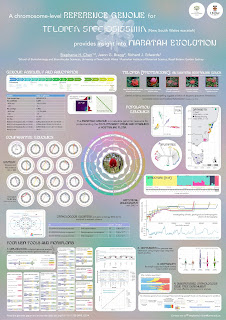
Telopea is an eastern Australian genus of five species of long-lived shrubs in the family Proteaceae. Previous work has characterised population structure and patterns of introgression between Telopea species. These studies were performed using a limited set of genetic markers, but point to the great potential of waratah as a model clade for understanding the processes of divergence, environmental adaptation and speciation, when enhanced by a genome-wide perspective enabled by a reference genome. However, few Proteaceae genomes and no waratah genomes are available.

We assembled the first chromosome-level reference genome for T. speciosissima (New South Wales waratah; 2n = 22) using Nanopore long-reads, 10x Chromium linked-reads and Hi-C data. The assembly spans 823 Mb (scaffold N50 of 69.0 Mb) with 97.8 % of Embryophyta universal single-copy orthologues (BUSCOs; n = 1,614) complete. Read depth analysis of 140 ‘Duplicated’ BUSCO genes reveals that almost all are real duplications, increasing confidence in protein family analysis using annotated protein-coding genes, highlighting a possible need to revise the BUSCO set for this lineage. Genome annotation predicted 34,706 genes and pseudogenes, including 27,481 protein-coding genes. We examined the evolutionary dynamics of Telopea using the reference genome in conjunction with DArTseq (n = 244) and whole genome shotgun sequencing (n = 14) of each of the seven lineages; there are three lineages of T. speciosissima – coastal, upland and southern.

Here, I will discuss the population structure and demographic history of the genus. We also examined phylogenomic relationships and developed a scalable method of rapidly generating species trees from short-read data to maximise the recovery of informative data from genomic datasets. The waratah reference genome represents an important new genomic resource in Proteaceae to accelerate our understanding of the origins and evolutionary dynamics of the Australian flora.

[Read more about the waratah genome, here.]


Small but mitey: high-quality long-read assembly of a streamlined mite genome from contaminated sequencing data (#17)

Richard J Edwards, Stephanie H Chen, Jason G Bragg.

As pilot data for project on myrtle rust resistance, we previously assembled two Myrtaceae genomes using 10x Chromium linked reads: Rhodamnia argentea (silver malletwood) and Syzygium oleosum (blue lilly pilly). Both draft genomes achieved scaffolding (N50 > 850 kb) and completeness (BUSCOv3 embryophyta_odb9 > 90 %) of sufficient quality to be annotated by NCBI RefSeq. However, signs of arthropod sequence contamination were subsequently found in the Rhodamnia argentea assembly. We therefore sought to identify and eliminate this contamination during improvement and curation of the genome for publication.

A risk-averse analysis highlighted 49.6 Mb (11.95%) on 2,996 of 15,781 scaffolds of possible arthropod origin. An improved assembly of the same tree, incorporating ~50X long-read (ONT) sequencing, has confirmed this contamination as 11 scaffolds (34.6 Mb) that are distinct from 75 R. argentea assembly scaffolds (346.7 Mb), increasing the likelihood of contamination over the integration of horizontally transferred genes. Taxonomic analysis of predicted protein-coding genes using Taxolotl (https://github.com/slimsuite/taxolotl) suggested that the contamination most likely originates from some form of mite (Order: Trombidiformes), but limited NCBInr mite sequences precluded better taxonomic resolution. Curiously, these contamination scaffolds showed a high depth of coverage (~36X), but a fairly low BUSCO completeness of 58.1% (v5 Augustus, metazoa_odb10 n=954), apparently inconsistent with typical mite genomes.

Phylogenomic analysis with available mite genomes identified the closest relative as Aculops lycopersici, a microscopic (0.2 mm long) eriophyoid mite with a heavily streamlined 32.5 Mb genome. Original low completeness appears to be from a combination of genome reduction and poor performance of that BUSCO version; BUSCO v5 MetaEuk eukaryota_odb10 (n=255) reports 82.8% completeness, which is approaching the 86.3% of A. lycopersici. Here, we discuss the evidence that we have assembled a highly complete but streamlined genome from an unknown eriophyoid mite, plus the need to improve genomic representation of contaminating pest species.


A genetic perspective on rapid adaptation in the globally invasive European starling (Sturnus vulgaris) (#255)

Katarina C Stuart, Richard J Edwards, William (Bill) B Sherwin, Lee Ann Rollins.
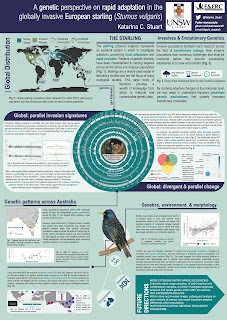
Few invasive birds are as globally successful or as well-studied as the common starling (Sturnus vulgaris). Native to the Palaearctic, the starling has been a prolific invader in North and South America, southern Africa, Australia, and The Pacific Islands, while facing declines in excess of 50% in in some native regions. Starlings present an invaluable opportunity to test predictions about the evolutionary trajectory of invasive populations, and gain insight into genetic shifts in response to anthropogenic alteration and climate change.

My research focuses primarily on the invasive European starling population in Australia and aims to investigate the genetics underlying their evolution, using a range of genomic approaches. Through historic museum sample sequencing, I examine single nucleotide polymorphism variations shifts between the native range and Australia, and find parallel selection on both continents, possibly resulting from common global selective forces such as exposure to pollutants and carbohydrate exposure. I further examine matched genetic, morphological, and environmental data to reveal patterns of heritability and plasticity across ecologically significant phenotypic traits, revealing that elevation, as well as rainfall and temperature variability plays an important role in shaping morphology and genetics. Finally, I investigated patterns of structural variants, to uncover evolutionarily significant large-scale genetic variants across a global data set, and more specifically characterise their role in rapid starling adaptation across the entirety of the Australian range. Overall, my research seeks to better understand mechanisms and patterns of genetic change within this species, which may be used to inform invasion or native range management. More broadly, this evolutionary research into the starling provide an important perspective on the role of rapid evolution in invasive species persistence, and the global pressures that may shape range shifts and evolution across many similar avian taxa.

Tuesday, 25 January 2022

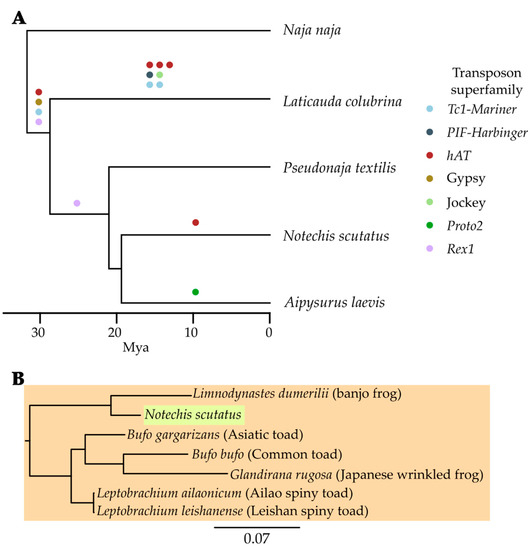
Horizontal transposon transfer and its implications for the ancestral ecology of hydrophiine snakes

The first of the BABS Genome papers has finally arrived, featuring our two 10x Genomics Supernova snake genomes. Such is the speed that genomics is moving, the snake assemblies themselves have moved on quite a bit since then and we hope to release chromosome-level versions soon. (The goalposts for a genome paper moved faster than they could be written up - always a challenge without dedicated researchers working on assemblies! Do get in touch if they’d be useful and we can collaborate.)

Rather than a pure genome paper, this paper makes use of our two elapid genomes to ask some interesting questions about possible horizontal transfer of transposable (mobile genetic) elements during the evolution of sea snakes - our two elapids provided good sister (mainland tiger snake) and outgroup (eastern brown snake) taxa for the olive sea snake, which was the focus of the study. It was doubly pleasing to collaborate on a transposable elements paper, as they were the subject of my PhD (albeit in bacteria, see here and here).

This paper is part of a special issue, Mobile Elements in Phylogenomic Reconstructions, and features some interesting examples of probable horiztonal transfer of mobile elements that provide insights into the evolutionary history of these species.


Galbraith JD, Ludington AJ, Sanders KL, Amos TG, Thomson VA, Enosi Tuipulotu D, Dunstan N, Edwards RJ, Suh A, Adelson DL (2022): Horizontal transposon transfer and its implications for the ancestral ecology of hydrophiine snakes. Genes 13(2):217. [Genes] [PDF] [bioRxiv]

Abstract

Transposable elements (TEs), also known as jumping genes, are sequences able to move or copy themselves within a genome. As TEs move throughout genomes they often act as a source of genetic novelty, hence understanding TE evolution within lineages may help in understanding environmental adaptation. Studies into the TE content of lineages of mammals such as bats have uncovered horizontal transposon transfer (HTT) into these lineages, with squamates often also containing the same TEs. Despite the repeated finding of HTT into squamates, little comparative research has examined the evolution of TEs within squamates. Here we examine a diverse family of Australo–Melanesian snakes (Hydrophiinae) to examine if the previously identified, order-wide pattern of variable TE content and activity holds true on a smaller scale. Hydrophiinae diverged from Asian elapids ~30 Mya and have since rapidly diversified into six amphibious, ~60 marine and ~100 terrestrial species that fill a broad range of ecological niches. We find TE diversity and expansion differs between hydrophiines and their Asian relatives and identify multiple HTTs into Hydrophiinae, including three likely transferred into the ancestral hydrophiine from fish. These HTT events provide the first tangible evidence that Hydrophiinae reached Australia from Asia via a marine route.

Friday, 3 December 2021

Limited Introgression between Rock-Wallabies with Extensive Chromosomal Rearrangements

When we were assembling the 10x Genomics linked read assemblies of several rock wallabies, one of them broke the lab record for Supernova assembly quality.

10x linked reads are a bit of a dead technology now, but genomes made with them are still useful and generating insights. One example is the first rock wallaby we assembled, as a (very small) part of a team that used the draft 10x genome assembly for Petrogale penicillata as a reference to investigate chromosomal rearrangements, published online today in Molecular Biology and Evolution, one of my favourite journals.


Potter P, Bragg JG, Turakulov R, Eldridge MDB, Deakin J, Kirkpatrick M, Edwards RJ & Moritz C (2022): Limited introgression between rock-wallabies with extensive chromosomal rearrangements. Molecular Biology and Evolution 39(1):msab333 https://doi.org/10.1093/molbev/msab333

Abstract

Chromosome rearrangements can result in the rapid evolution of hybrid incompatibilities. Robertsonian fusions, particularly those with monobrachial homology, can drive reproductive isolation amongst recently diverged taxa. The recent radiation of rock-wallabies (genus Petrogale) is an important model to explore the role of Robertsonian fusions in speciation. Here, we pursue that goal using an extensive sampling of populations and genomes of Petrogale from north-eastern Australia. In contrast to previous assessments using mitochondrial DNA or nuclear microsatellite loci, genomic data are able to separate the most closely related species and to resolve their divergence histories. Both phylogenetic and population genetic analyses indicate introgression between two species that differ by a single Robertsonian fusion. Based on the available data, there is also evidence for introgression between two species which share complex chromosomal rearrangements. However, the remaining results show no consistent signature of introgression amongst species pairs and where evident, indicate generally low introgression overall. X-linked loci have elevated divergence compared with autosomal loci indicating a potential role for genic evolution to produce reproductive isolation in concert with chromosome change. Our results highlight the value of genome scale data in evaluating the role of Robertsonian fusions and structural variation in divergence, speciation, and patterns of molecular evolution.

Thursday, 2 December 2021

EdwardsLab at Australasian Evolution Society #AUSEVO2021

Look out for some interesting talks by Edwards Lab members at this year’s Australasian Evolution Society 2021 conference, starting today:

Thursday 2nd December: 3-minute talks | 1130-1230

Kelton Cheung - Analysis of mitochondrial DNA reveals significant genetic diversity in invasive Australian cane toads

Kelton Cheung, Mark Richardson, Richard Edwards & Lee Ann Rollins

Mitochondrial DNA haplotype patterns across the native and invaded ranges can reveal the history and evolutionary trajectory of invasions. The invasion of Australia by the cane toad (Rhinella marina) has accelerated as it expanded westward. Despite this success, previous studies reported no mitochondrial genetic diversity in Australia. Here, we assembled a complete mitochondrial reference genome and haplotyped toads (N=119) from the native range and two introduced populations (Hawai’i and Australia), using whole genome and RNA-seq data. The complete R. marina mitochondrial genome consists of 18,152 base pairs with no significant gene arrangement as compared to other bufonid species. Although native range genetic diversity was much higher than that of the introduced ranges, we identified 29 haplotypes in Australia. While we did find evidence of founder effects following introduction, our results suggest there is significant genetic diversity within Australia, which may assist adaptation and invasion success in this species.


Thursday 2nd December: Selection 1 | 1415-1430

Katarina Stuart - A genetic perspective on rapid adaptation in the globally invasive European starling (Sturnus vulgaris)

Abstract coming soon…


Thursday 2nd December: Biogeography and phylogenetics | 1530-1545

Richard Edwards - DepthKopy: copy number prediction using single-copy long-read depth profiles

Richard J Edwards, Stephanie H Chen, Katarina C Stuart, Mark M Tanaka & Jason G Bragg

Gene duplication, followed by functional divergence of gene copies, is a fundamental component of genetic adaption and the evolution of novelty. Increasingly, evolutionary studies make use of the ever-expanding number of high-quality genome assemblies to characterise patterns of gene gain and loss. However, even reference genomes of the highest quality can experience assembly errors at tandemly repeated gene loci, resulting in incorrect inference of gene duplication patterns. Here, we present DepthKopy (https://github.com/slimsuite/depthkopy), which estimates the copy number for a gene, region or sequence of interest, using an estimate of single-copy sequencing depth derived from complete BUSCO genes. This is useful for identifying haplotigs, and collapsed repeat regions during genome assembly curation. Critically, for evolutionary studies of gene families, DepthKopy can identify genes for which the number of genes in the assembly does not seem to match the genome.


Friday 3rd December: Climate change and temperature | 1330-1345

Collin Ahrens - Genomic constraints of drought adaptation

Abstract coming soon…

Wednesday, 6 October 2021

Edwards Lab at Genetics Society of AustralAsia 2021 #GSAA21

Look out for some interesting genomics talks by Edwards Lab members at this year’s Genetics Society of AustralAsia 2021 conference, which started today. Congratulation to Stephanie for winning the Spencer Smith-White Travel Award (shame about the lack of travel!), Cadel for getting a lightning talk as an Honours student. And a shout out to Kat, who is one of the conference organisers.

Thursday 7th October: Genomics and Transcriptomics Session | 1:30-2:00 (Lightning talks)

Cadel Watson - dedUCE: efficient identification of Ultraconserved Elements from multiple genomes

Cadel Watson, Mitchell J. Cummins, Yasir Kusay, Maxine Halbheer, Eric Urng, John S. Mattick and Richard J. Edwards

Ultraconserved elements (UCEs) are DNA sequences which are extremely conserved and found almost unchanged in the genomes of multiple, divergent species [1]. UCEs have been found in a wide variety of organisms, including mammals, fish, insects, birds, and plants. Whilst the evidence suggests that that they are the result of natural selection, indicating biological importance, their function has thus far proven elusive [2]. The recent (and ongoing) explosion in the quality and quantity of reference genomes across multiple taxa provides new opportunities for investigating the prevalence, evolution and role of UCEs. However, the field is hampered by a lack of fast and resource-efficient algorithms to identify UCEs. Furthermore, common alignment-based algorithms fail to identify non-syntenic UCEs.

Here, we present dedUCE, a novel tool for identifying all UCEs in a set of genomes. dedUCE uses a hash-based algorithm to rapidly identify core UCE kmers that are shared by multiple genomes, before extending and merging candidates into a final comprehensive but non-redundant set of UCEs. dedUCE can support UCEs appearing out-of-order due to genetic rearrangements and/or assembly artefacts, and is able to return UCEs with inexact homology. Stringency can be controlled by parameters controlling the length, support (number of genomes) and required sequence identity. Preliminary results show that dedUCE can identify all UCEs in a group of 40 mammalian genomes in 8 hours on a 16-core machine, which is orders of magnitude faster than previous algorithms. Applications of dedUCE will be discussed, including improving the definition of UCEs, and making use of UCE content to assess genome assembly completeness.

  1. Gill Bejerano, Michael Pheasant, Igor Makunin, Stuart Stephen, W. James Kent, John S. Mattick, and David Haussler (2004). Ultraconserved El- ements in the Human Genome. Science, 304(5675):1321–1325.

  2. Konstantinos Kritsas, Samuel E. Wuest, Daniel Hupalo, Andrew D. Kern, Thomas Wicker, and Ueli Grossniklaus (2012). Computational analysis and char- acterization of UCE-like elements (ULEs) in plant genomes. Genome Research, 22(12):2455–2466.


Friday 8th October: Ecological and Evolutionary Genetics Session | 10:45-11:00

Katarina Stuart - A genetic perspective on rapid adaptation in the globally invasive European starling (Sturnus vulgaris)

Stuart KC, Sherwin WB, Edwards RJ & Rollins LA

Few invasive birds are as globally successful or as well-studied as the common starling (Sturnus vulgaris). Native to the Palaearctic, the starling has been a prolific invader in North and South America, southern Africa, Australia, and The Pacific Islands, while facing declines in excess of 50% in in some native regions. Starlings present an invaluable opportunity to test predictions about the evolutionary trajectory of invasive populations, and gain insight into genetic shifts in response to anthropogenic alteration and climate change. My research focuses primarily on the invasive European starling population in Australia and aims to investigate the genetics underlying their evolution, using a range of genomic approaches. Through historic museum sample sequencing, I examine single nucleotide polymorphism variations shifts between the native range and Australia, and find parallel selection on both continents, possibly resulting from common global selective forces such as exposure to pollutants and carbohydrate exposure. I further examine matched genetic, morphological, and environmental data to reveal patterns of heritability and plasticity across ecologically significant phenotypic traits, revealing that elevation, as well as rainfall and temperature variability plays an important role in shaping morphology and genetics. Finally, I investigated patterns of structural variants, to uncover evolutionarily significant large-scale genetic variants across a global data set, and more specifically characterise their role in rapid starling adaptation across the entirety of the Australian range. Overall, my research seeks to better understand mechanisms and patterns of genetic change within this species, which may be used to inform invasion or native range management. More broadly, this evolutionary research into the starling provide an important perspective on the role of rapid evolution in invasive species persistence, and the global pressures that may shape range shifts and evolution across many similar avian taxa.


Friday 8th October: Spencer Smith-White Travel Award recipient | 1:15-1:30

Stephanie Chen - Genomics of speciation and introgression: insights from waratah (Telopea spp.) as a model clade

Telopea is an eastern Australian genus of five species of long-lived shrubs in the family Proteaceae. Previous work has characterised population structure and patterns of introgression between Telopea species. These studies were performed using a limited set of genetic markers, but point to the great potential of waratah as a model clade for understanding the processes of divergence, environmental adaptation and speciation, when enhanced by a genome-wide perspective enabled by a reference genome. However, few Proteaceae genomes and no waratah genomes are available. We assembled the first chromosome-level reference genome for T. speciosissima (New South Wales waratah; 2n = 22) using Nanopore long-reads, 10x Chromium linked-reads and Hi-C data. The assembly spans 823 Mb, representing 93.9 % of the estimated genome size, with a scaffold N50 of 69.1 Mb and 91.3 % of complete Embryophyta universal single-copy orthologs (BUSCOs) are present. We examined the evolutionary dynamics of Telopea using the reference genome in conjunction with DArTseq (n = 244) and whole genome shotgun sequencing (n = 14) of each of the seven lineages; there are three lineages of T. speciosissima – coastal, upland, and southern. Here, I will discuss the population structure and demographic history of the genus. We also examined phylogenomic relationships and developed a scalable method of rapidly generating species trees from short-read data to maximise the recovery of informative data from genomic datasets. The waratah reference genome represents an important new genomic resource in Proteaceae to accelerate our understanding of the origins and evolutionary dynamics of the Australian flora.

Monday, 31 May 2021

Gabriella Cozijnsen (Honours student)

Gabriella Cozijnsen completed a Bachelor of Science from UNSW in 2020, majoring in genetics and physics with minor in chemistry. She commenced her honours (Genetics) with the Edwards Lab in Term 2, 2021.

Gabby’s project is to resolve and characterise the sex chromosomes in our two snakes sequenced as part of the BABS Genome Project and in collaboration with the The Australian Amphibian and Reptile Genomics Initiative (AusARG) and A/Prof Paul Waters.

Friday, 4 December 2020

EdwardsLab at #AusEvo2020

If you missed his talk at ABACBS2020, Jack will be presenting today at the Australasian Evolution Society 2020 Conference about The role of gene duplication in the evolution of snake venoms. Two conference presentations in two weeks - not a bad way to prepare for your Honours viva post-submission. Well done, Jack!

Also, Kat Stuart will be presenting her work on invasive starlings in Zoom 2 at 13:00 AEDT. Kat’s talks are always great to listen to:

  • Katarina Stuart: What drives invasion success? Using historical museum samples to examine evolution in an invasive passerine.

Tuesday, 18 February 2020

Jack Clarke (Honours student)

Jack worked in the Edwards Lab in 2020 for his Honour years, researching the evolution of snake venoms using the lab’s de novo genome assemblies of two Australian snakes (Eastern brown snake and mainland tiger snake). His researched focused on phylogenetic analysis of venom gene families in order to understand how venom divergence has occurred in different branches of the snake lineage. The work focused on the role that tandem gene duplication events had played in the evolution of specific venom gene families and identified novel sites of tandem duplication shared across multiple snake species.

Jack holds a Bachelor of Advanced Science (Honours) (First Class) with majors in Bioinformatics and Genetics. He is currently completing his PhD at UNSW in collaboration with the Victor Chang institute.

[LinkedIn]

Friday, 31 January 2020

Research snapshot - January 2020

One of the most important, interesting and challenging questions in biology is how new traits evolve at the molecular level. My lab employs sequence analysis techniques to interrogate DNA and protein sequences for the signals left behind by evolution. We are a bioinformatics lab but like to incorporate bench/field data through collaboration wherever possible.

Main Research

Building on a solid foundation of bioinformatics and evolutionary theory, we apply genomics, transcriptomics, proteomics and interactomics and systems analysis to understand complex biological systems. Core research activities can be broadly divided into two main themes:

  1. Evolutionary Genomics, with a focus on applying de novo genome assembly and population genomics to problems in ecology and biotechnology.

  2. Protein-protein interactions, with a focus on the prediction of short linear interaction motifs and their role in human health and disease, including host-pathogen interactions.

These are explored in more detail, below.

1. Evolutionary Genomics.

The main research focus of the lab is the exploitation of genomic and post-genomic data to understand biological function and adaptation to novel environments. We work closely with the Ramaciotti Centre for Genomics and are involved in numerous de novo whole genome sequencing and assembly projects, using short read (Illumina), long read (PacBio & Nanopore) and linked read (10x Chromium) sequencing. One of the biggest of these is leading the bioinformatics and assembly effort in a consortium to sequence the cane toad genome, and leading the BABS Genome project to sequence two iconic Australian snakes. We are a member of the Oz Mammals Genomics initiative, assisting with the sequencing and assembly of Australia’s unique marsupial fauna. In 2018, we were selected as part of a team to sequence the Waratah genome as part of the pilot phase for the new Genomics of Australian Plants initiative.

We enjoy bringing our bioinformatics to bear on a variety of collaborative research projects. Most notably, we have an ARC Linkage Grant with Microbiogen Pty Ltd to understand how a strain of Saccharomyces cerevisiae has evolved to efficiently use xylose as a sole carbon source: something vital for second generation biofuel production that wild yeast cannot do. We are combining comparative genomics, evolutionary genetics, RNA-Seq transcriptomics, and competition assays to understand how the novel metabolism evolved. Through deep Illumina resequencing of evolving populations, and assembling reliable complete genomes of the founding ancestors, the ultimate goal is to trace how mutations have interacted with existing genetic variation during adaptive evolution. More recently, we have received an ARC Linkage Grant with the Royal Botanic Gardens and Domain Trust, to apply genomics approaches to the challenges of rainforest tree conservation in the face of climate change and invasive pathogens. We are also collaborating with industrial and academic partners to de novo sequence, assemble, annotate and interrogate the genomes of a selection of microbes with interesting metabolic abilities.

2. Short Linear Motifs (SLiMs).

Many protein-protein interactions are mediated by Short Linear Motifs (SLiMs): short stretches of proteins (5-15 amino acids long), of which only a few positions are critical to function. These motifs are vital for biological processes of fundamental importance, acting as ligands for molecular signalling, post-translational modifications and subcellular targeting. SLiMs have extremely compact protein interaction interfaces, generally encoded by less than 4 major affinity-/specificity-determining residues. Their small size enables high functional density and evolutionary plasticity, making them frequent products of convergent “ex nihilo” evolution. It also makes them challenging to identify, both experimentally and computationally.

A major focus of the lab is the computational prediction of SLiMs from protein sequences. This research originated with Rich’s postdoctoral research, during which he developed a sequence analysis methods for the rational design of biologically active short peptides. He subsequently developed SLiMDisc, one of the first algorithms for successfully predicting novel SLiMs from sequence data - and coined the term “SLiM” into the bargain. This subsequently lead to the development of SLiMFinder, the first SLiM prediction algorithm able to estimate the statistical significance of motif predictions. SLiMFinder greatly increased the reliability of predictions. SLiMFinder has since spawned a number of motif discovery tools and webservers and is still arguably the most successful SLiM prediction tool on benchmarking data. Methods are made available through the SLiMSuite bioinformatics package and webservers.

Current research is looking to develop these SLiM prediction tools further and apply them to important biological questions. Of particular interest is the molecular mimicry employed by viruses to interact with host proteins and the role of SLiMs in other diseases, such as cancer. Other work is concerned with the evolutionary dynamics of SLiMs within protein interaction networks.

OTHER RESEARCH PROJECTS

In addition to the main research in the lab, the lab has a number of interdisciplinary collaborative projects applying bioinformatics tools and molecular evolution theory to experimental biology, often using large genomic, transcriptomic and/or proteomic datasets. These projects often involve the development of bespoke bioinformatics pipelines and a number of open source bioinformatics tools have been generated as a result. Please see the Publications and Lab software pages for more detail, or get in touch if something catches your eye and you want to find out more. We frequently have small collaborations and/or undergraduate student research projects. Many of these are “on hold” waiting for the right person, or sometimes data, to come along. If you think that you have what it needs, get in touch!

Tuesday, 9 July 2019

We’ve been funded! ARC Linkage - Optimising plant populations for ecological restoration and resilience

We are very happy to report another successful ARC Linkage grant application.

LP180100721: Optimising plant populations for ecological restoration and resilience

Dr Richard Edwards; Professor Justin Borevitz; Dr Jason Bragg; Dr Maurizio Rossetto; Dr Brett Summerell; Dr Marlien van der Merwe

When choosing individual plants for restoration populations, there is potentially a trade-off between maximising genetic diversity (‘adaptability’) and selection for desirable properties (‘adaptation’). This project aims to develop pioneering methods to quantify this trade-off, and facilitate the design of optimised populations, with a focus on two Australian rainforest trees that are being impacted by myrtle rust infection: Rhodamnia argentea and Rhodamnia rubescens. By studying the genetic variation in each species, and how this relates to myrtle rust resistance and climate, this project aims to design populations that are genetically diverse, maximally resistant to myrtle rust, and adapted to future climate.

We are collaborating with the Royal Botanic Garden and Domain Trust to apply genomics to challenges of conservation for rainforest trees in the face of climate change and invasive pathogens.

There will be job and studentship opportunities associated with this grant, so watch this space (or get in touch)!

Friday, 5 July 2019

Research snapshot - July 2019

One of the most important, interesting and challenging questions in biology is how new traits evolve at the molecular level. My lab employs sequence analysis techniques to interrogate protein and DNA sequences for the signals left behind by evolution. We are a bioinformatics lab but like to incorporate bench data through collaboration wherever possible.

Main Research

The core research in the lab is broadly divided into two main themes:

1. Evolutionary Genomics.

Since moving to UNSW, a major focus of the lab has been the exploitation of genomic and post-genomic data to understand biological function and adaptation to novel environments. We work closely with the Ramaciotti Centre for Genomics and are involved in numerous de novo whole genome sequencing and assembly projects, using short read (Illumina), long read (PacBio & Nanopore) and linked read (10x Chromium) sequencing. The biggest of these is leading the bioinformatics and assembly effort in a consortium to sequence the cane toad genome, and leading the BABS Genome project to sequence two iconic Australian snakes. We are a member of the Oz Mammals Genomics initiative, assisting with the sequencing and assembly of Australia’s unique marsupial fauna. In 2018, we were selected as part of a team to sequence the Waratah genome as part of the pilot phase for the new Genomics of Australian Plants initiative.

We enjoy bringing our bioinformatics to bear on a variety of collaborative research projects. Most notably, we have an ARC Linkage Grant with Microbiogen Pty Ltd to understand how a strain of Saccharomyces cerevisiae has evolved to efficiently use xylose as a sole carbon source: something vital for second-generation biofuel production that wild yeast cannot do. We are combining comparative genomics, evolutionary genetics, RNA-Seq transcriptomics, and competition assays to understand how the novel metabolism evolved. Through deep Illumina resequencing of evolving populations, and assembling reliable complete genomes of the founding ancestors, the ultimate goal is to trace how mutations have interacted with existing genetic variation during adaptive evolution. More recently, we have received an ARC Linkage Grant with the Royal Botanic Gardens and Domain Trust, to apply genomics approaches to the challenges of rainforest tree conservation in the face of climate change and invasive pathogens. We are also collaborating with industrial and academic partners to de novo sequence, assemble, annotate and interrogate the genomes of a selection of microbes with interesting metabolic abilities.

2. Short Linear Motifs (SLiMs).

Many protein-protein interactions are mediated by Short Linear Motifs (SLiMs): short stretches of proteins (5-15 amino acids long), of which only a few positions are critical to function. These motifs are vital for biological processes of fundamental importance, acting as ligands for molecular signalling, post-translational modifications and subcellular targeting. SLiMs have extremely compact protein interaction interfaces, generally encoded by less than 4 major affinity-/specificity-determining residues. Their small size enables high functional density and evolutionary plasticity, making them frequent products of convergent “ex nihilo” evolution. It also makes them challenging to identify, both experimentally and computationally.

A major focus of the lab is the computational prediction of SLiMs from protein sequences. This research originated with Rich’s postdoctoral research, during which he developed a sequence analysis methods for the rational design of biologically active short peptides. He subsequently developed SLiMDisc, one of the first algorithms for successfully predicting novel SLiMs from sequence data - and coined the term “SLiM” into the bargain. This subsequently lead to the development of SLiMFinder, the first SLiM prediction algorithm able to estimate the statistical significance of motif predictions. SLiMFinder greatly increased the reliability of predictions. SLiMFinder has since spawned a number of motif discovery tools and webservers and is still arguably the most successful SLiM prediction tool on benchmarking data. Methods are made available through the SLiMSuite bioinformatics package and webservers.

Current research is looking to develop these SLiM prediction tools further and apply them to important biological questions. Of particular interest is the molecular mimicry employed by viruses to interact with host proteins and the role of SLiMs in other diseases, such as cancer. Other work is concerned with the evolutionary dynamics of SLiMs within protein interaction networks.

OTHER RESEARCH PROJECTS

In addition to the main research in the lab, the lab has a number of interdisciplinary collaborative projects applying bioinformatics tools and molecular evolution theory to experimental biology, often using large genomic, transcriptomic and/or proteomic datasets. These projects often involve the development of bespoke bioinformatics pipelines and a number of open source bioinformatics tools have been generated as a result. Please see the Publications and Lab software pages for more detail, or get in touch if something catches your eye and you want to find out more. We frequently have small collaborations and/or undergraduate student research projects. Many of these are “on hold” waiting for the right person, or sometimes data, to come along. If you think that you have what it needs, get in touch!

Monday, 18 March 2019

Term 2 Honours projects available

For any students completing their undegrad studies in UNSW Term 1, or external students finishing before June 2019, the UNSW Term 2 honours student application is now open. Deadline for Term 2 applications is 5pm Friday 12th April 2019. For how to apply please check the Faculty link: http://www.science.unsw.edu.au/honours-apply.

As usual, the EdwardsLab is looking to recruit enthusiastic students in genomics, in two main areas:

  1. Comparative genomics and molecular evolution in yeast, using long-read PacBio sequencing. We are particularly keen to get a student to work on aspects of our ARC Linkage grant, investigating the evolution of a novel biochemical pathway in yeast.

  2. De novo whole genome sequencing of vertebrates, including two snakes and the cane toad. In addition to general assembly and annotation activities, the lab has a few analytical tools that would benefit from

More details of honours can be found on the BABS website, or please get in touch if you have questions about specific projects. We welcome students interested in any of our Research areas, not just the projects listed. Applications from non-UNSW students are also encouraged.

Term 3 applications

Please also note that T3 honours application open date and deadline below, should you apply for T3 intake:

  • Applications open from Friday 17th May 2019

  • Deadline for Term 3 applications is 5pm Friday 26th July 2019

Wednesday, 28 November 2018

EdwardsLab at #ABACBS2018

For those who missed it, there’s a (slightly old) poster version of my ABACBS 2018 talk - Sequencing snakes: Pseudodiploid pseudo-long-read whole genome sequencing and assembly of Pseudonaja textilis (eastern brown snake) and Notechis scutatus (mainland tiger snake). If anything in the talk (except the repeat stuff) looks useful to you, this is a citeable poster:

Edwards RJ et al. Pseudodiploid pseudo-long-read whole genome sequencing and assembly of Pseudonaja textilis (eastern brown snake) and Notechis scutatus (mainland tiger snake) [version 1; not peer reviewed]. F1000Research 2018, 7:753 (poster) (doi: 10.7490/f1000research.1115550.1)

We’re still developing the genome size prediction and BUSCO comparison/compilation tools, so get in touch if either of these look useful to you.

ABACBS2018 Posters

We have three lab posters in Poster session 2 this morning:

  • Poster #16. Åsa Pérez-Bercoff, Using structural variant detection to resolve difficult regions of a genome assembly.

  • Poster #21. Kirsti Paulsen, Optimising intrinsic protein disorder prediction for short linear motif discovery.

  • Poster #26. Katarina Stuart, Evolution in invasive populations: using genomics to reveal drivers of invasion success in the Australian European starling (Sturnus vulgaris) introduction across Australia.

Also check out the posters of our UNSW neighbours from the Wilkins lab:

  • Poster #29. Chi Nam Ignatius (Igy) Pang, Benchmarking Protein Correlation Profiling datasets against reference protein complexes: case studies in S. cerevisiae.

  • Poster #44. Susan Corley, QuantSeq 3’ sequencing paired with Salmon quantification provides a fast reliable approach for high throughput transcriptomic analysis.

  • Poster #49. Xabier Vázquez-Campos, OTUreporter: an automated pipeline for the analysis and report of amplicon sequencing data.

Wednesday, 3 October 2018

Research snapshot - October 2018

One of the most important, interesting and challenging questions in biology is how new traits evolve at the molecular level. My lab employs sequence analysis techniques to interrogate protein and DNA sequences for the signals left behind by evolution. We are a bioinformatics lab but like to incorporate bench data through collaboration wherever possible.

Main Research

The core research in the lab is broadly divided into three main themes:

1. Short Linear Motifs (SLiMs)

Many protein-protein interactions are mediated by Short Linear Motifs (SLiMs): short stretches of proteins (5-15 amino acids long), of which only a few positions are critical to function. These motifs are vital for biological processes of fundamental importance, acting as ligands for molecular signalling, post-translational modifications and subcellular targeting. SLiMs have extremely compact protein interaction interfaces, generally encoded by less than 4 major affinity-/specificity-determining residues. Their small size enables high functional density and evolutionary plasticity, making them frequent products of convergent "ex nihilo" evolution. It also makes them challenging to identify, both experimentally and computationally.

A major focus of the lab is the computational prediction of SLiMs from protein sequences. This research originated with Rich’s postdoctoral research, during which he developed a sequence analysis methods for the rational design of biologically active short peptides. He subsequently developed SLiMDisc, one of the first algorithms for successfully predicting novel SLiMs from sequence data - and coined the term “SLiM” into the bargain. This subsequently lead to the development of SLiMFinder, the first SLiM prediction algorithm able to estimate the statistical significance of motif predictions. SLiMFinder greatly increased the reliability of predictions. SLiMFinder has since spawned a number of motif discovery tools and webservers and is still arguably the most successful SLiM prediction tool on benchmarking data.

Current research is looking to develop these SLiM prediction tools further and apply them to important biological questions. Of particular interest is the molecular mimicry employed by viruses to interact with host proteins and the role of SLiMs in other diseases, such as cancer. Other work is concerned with the evolutionary dynamics of SLiMs within protein interaction networks.

2. The evolution of novel functions.

Previous work in the lab has focused on the evolution of functional specificity following gene duplication. Since moving to UNSW, activities have shifted more towards the use of PacBio long read sequencing and other cutting-edge sequencing technologies, working closely with the Ramaciotti Centre for Genomics. We are collaborating with industrial and academic partners to de novo sequence, assemble, annotate and interrogate the genomes of a selection of microbes with interesting metabolic abilities. Most notably, we have an ARC Linkage Grant with Microbiogen Pty Ltd. to understand how a strain of Saccharomyces cerevisiae has evolved to efficiently use xylose as a sole carbon source: something vital for second generation biofuel production that wild yeast cannot do. We are combining comparative genomics, evolutionary genetics, RNA-Seq transcriptomics, and competition assays to understand how the novel metabolism evolved. Through deep Illumina resequencing of evolving populations, and assembling reliable complete genomes of the founding ancestors, the ultimate goal is to trace how mutations have interacted with existing genetic variation during adaptive evolution.

3. Whole genome sequencing and assembly.

Following our experiences with de novo whole genome assembly in yeast, the lab is getting involved in an increasing number of genome sequencing projects. The biggest of these is leading the bioinformatics and assembly effort in a consortium to sequence the cane toad genome. The lab is also leading the BABS Genome project two iconic Australian snakes for use in teaching and public engagement. We are a member of the Oz Mammals Genomics initiative, assisting with the sequencing and assembly of Australia's unique marsupial fauna. We also have an number of bacterial long-read whole genome sequencing collaborations.

Other Research Projects

In addition to the main research in the lab, the lab has a number of interdisciplinary collaborative projects applying bioinformatics tools and molecular evolution theory to experimental biology, often using large genomic, transcriptomic and/or proteomic datasets. These projects often involve the development of bespoke bioinformatics pipelines and a number of open source bioinformatics tools have been generated as a result. We frequently have small collaborations and/or undergraduate student research projects. Many of these are “on hold” waiting for the right person, or sometimes data, to come along. If you think that you have what it needs, get in touch!

Previous Research

The lab has been involved in a number of interdisciplinary collaborative projects applying bioinformatics tools and molecular evolution theory to experimental biology, often using large genomic, transcriptomic and/or proteomic datasets. These projects often involved the development of bespoke bioinformatics pipelines and a number of open source bioinformatics tools have been generated as a result. Please see the Publications and Lab software pages for more detail, or get in touch if something catches your eye and you want to find out more.

Sunday, 1 July 2018

Edwards Lab at Genetics Society of AustralAsia 2018

Åsa Pérez-Bercoff is attending GSA 2018 in Canberra, this week. Today at 16:30, she will be presenting an updated and extended version of her SBRS18 talk, Investigating the evolution of complex, novel traits using whole genome sequencing and molecular palaeontology as part of the Evolutionary Genetics session.

Find out what this plot means…

…and more!