Showing posts with label plants. Show all posts

Friday, 11 July 2025

Pathways to Recovery: Genomics and Resistance Assays for Tree Species Devastated by the Myrtle Rust Pathogen

The latest collaborative paper from the lab is out in Molecular Ecology, with another great contribution from former PhD student Stephanie Chen. I really enjoyed collaborating with the team at the Royal Botanic Gardens and Domain Trust (and beyond), and this accomplishment feels like a fitting way to celebrate my first week as an ecological consultant at ORS. It combines reference genomes with population genomic data and resistance assays to provide hope in the fight against invasive pathogens - the notorious myrtle rust in this case - but with a warning: these species, like so many, have already suffered dramatic losses of genetic variation.

We have the tools and the knowledge to save biodiversity. We need the political will. And we don’t have the time to delay any further.

Chen SH, Yap YS, Viler V, Stehn C, Sandhu KS, Percival J, Pegg GS, Menzies T, Jones A, Guo K, Giblin FR, Cohen J, Edwards RJ, Rossetto M & Bragg JG (2025): Pathways to Recovery: Genomics and Resistance Assays for Tree Species Devastated by the Myrtle Rust Pathogen. Molecular Ecology e70030. [Mol Ecol] [PubMed] [bioRxiv]

Abstract

Myrtle rust is a plant disease caused by the invasive fungal pathogen Austropuccinia psidii (G. Winter) Beenken, which has a global host list of 480 species. It was detected in Australia in 2010 and has caused the rapid decline of native Myrtaceae species, including rainforest trees Rhodamnia rubescens (Benth.) Miq. (scrub turpentine) and Rhodomyrtus psidioides (G.Don) Benth. (native guava). Ex situ collections of these species have been established, with the goal of preserving remaining genetic variation. Analysis of reduced representation sequencing (DArTseq; n = 444 for R. rubescens and n = 301 for R. psidioides) showed genetic diversity is distributed along a latitudinal gradient across the range of each species. A panel of samples of each species (n = 27 for R. rubescens and n = 37 for R. psidioides) was resequenced at genome scale, revealing large historical effective population sizes, and little variation among individuals in inferred levels of deleterious load. In Rhodamnia rubescens, experimental assays (n = 297) identified individuals that are putatively resistant to myrtle rust. This highlights two important points: there are tangible pathways to recovery for species that are highly susceptible to rust via a genetically informed breeding programme, and there is a critical need to act quickly before more standing diversity is lost.

Tuesday, 17 December 2024

Parental assigned chromosomes for cultivated cacao provides insights into genetic architecture underlying resistance to vascular streak dieback

As a big fan of chocolate, it was great to have the opportunity to help out with a cacao genome. This study presents the first diploid, fully scaffolded, and parentally phased genome resource for Theobroma cacao L. to provide insights into the genetic architecture underlying resistance and susceptibility to vascular streak dieback (VSD), a significant threat to cacao production in Southeast Asia and Melanesia. By analyzing NLR gene clusters and other disease response gene candidates in proximity to informative QTLs, the research identifies structural variants within NLRs inherited from resistant and susceptible parents, offering potential breeding targets for VSD resistance.

Tobias PA, Downs J, Epaina P, Singh G, Park RF, Edwards RJ, Brugman E, Zulkifli A, Muhammad J, Purwantara A & Guest DI (2024): Parental assigned chromosomes for cultivated cacao provides insights into genetic architecture underlying resistance to vascular streak dieback. The Plant Genome doi: 10.1002/tpg2.20524. [Plant Genome] [bioRxiv] [PubMed]

Abstract

Diseases of Theobroma cacao L. (Malvaceae) disrupt cocoa bean supply and economically impact growers. Vascular streak dieback (VSD), caused by Ceratobasidium theobromae, is a new encounter disease of cacao currently contained to southeast Asia and Melanesia. Resistance to VSD has been tested with large progeny trials in Sulawesi, Indonesia, and in Papua New Guinea with the identification of informative quantitative trait loci (QTLs). Using a VSD susceptible progeny tree (clone 26), derived from a resistant and susceptible parental cross, we assembled the genome to chromosome-level and discriminated alleles inherited from either resistant or susceptible parents. The parentally phased genomes were annotated for all predicted genes and then specifically for resistance genes of the nucleotide-binding site leucine-rich repeat class (NLR). On investigation, we determined the presence of NLR clusters and other potential disease response gene candidates in proximity to informative QTLs. We identified structural variants within NLRs inherited from parentals. We present the first diploid, fully scaffolded, and parentally phased genome resource for T. cacao L. and provide insights into the genetics underlying resistance and susceptibility to VSD.

Sunday, 3 November 2024

Chromosome-level genome assembly of the Australian rainforest tree Rhodamnia argentea (malletwood)

Genome projects don’t always go according to plan, and when we first sequenced Rhodamnia argentea with 10x Genomics linked reads, we accidentally sequenced a parasite along with it. This was quite hard to identify from the sequencing data itself, as the depth of sequencing was quite high, and we were unable to identify the guilty bug itself, which is probably microscopic. Getting to the bottom of this took a back seat for a while when the focus of the project shifted to Melaleuca quinquenervia, but with the addition of ONT reads and Hi-C, we have now been able to generate a chromosome-level decontaminated assembly. (An assembly of the contaminating mite will follow…)

Chen SH, Jones A, Lu-Irving P, Yap JYS, van der Merwe M, Bragg JG & Edwards RJ (2024): Chromosome-level genome assembly of the Australian rainforest tree Rhodamnia argentea (malletwood). Genome Biology and Evolution 16(11):evae238. [Gen Biol Evol] [PubMed]

Abstract

Myrtaceae are a large family of woody plants, including hundreds that are currently under threat from the global spread of a fungal pathogen, Austropuccinia psidii (G. Winter) Beenken, which causes myrtle rust. A reference genome for the Australian native rainforest tree Rhodamnia argentea Benth. (malletwood) was assembled from Oxford Nanopore Technologies long-reads, 10x Genomics Chromium linked-reads, and Hi-C data (N50 = 32.3 Mb and BUSCO completeness 98.0%) with 99.0% of the 347 Mb assembly anchored to 11 chromosomes (2n = 22). The R. argentea genome will inform conservation efforts for Myrtaceae species threatened by myrtle rust, against which it shows variable resistance. We observed contamination in the sequencing data, and further investigation revealed an arthropod source. This study emphasizes the importance of checking sequencing data for contamination, especially when working with nonmodel organisms. It also enhances our understanding of a tree that faces conservation challenges, contributing to broader biodiversity initiatives.

Tuesday, 9 July 2024

New pre-print: The Genomics for Australian Plants (GAP) framework initiative – developing genomic resources for understanding the evolution and conservation of the Australian flora

The Bioplatforms Australia Genomics for Australian Plants (GAP) initiative aims to sequence and assemble representative genomes of Australia’s unique flora, which boasts over 24,000 native vascular plant species evolved over millions of years. The program brings together academic groups, herbaria and botanic gardens from across the country to build genomic capacity and create valuable resources for the classification, conservation and utilisation of Australian plants. We were lucky enough to sequence one of the first GAP species, the NSW Waratah. Now, the capstone paper outlining the project and its key findings from multiple species is out as a pre-print at EcoEvoRxiv:

Simpson L, Cantrill DJ, Byrne M, Allnutt TR, King GJ, Lum M, Al Bkhetan Z, Andrew R, Baker WJ, Barrett MD, Batley J, Berry O, Binks RM, Bragg JG, Broadhurst L, Brown G, Bruhl J, Edwards RJ, Ferguson S, Forest F, Gustafsson J, Hammer TA, Holmes GD, Jackson CJ, James EA, Jones A, Kersey PJ, Leitch IJ, Maurin O, McLay TGB, Murphy DJ, Nargar K, Nauheimer L, Sauquet H, Schmidt-Lebuhn AN, Shepherd KA, Syme AE, Waycott M, Wilson TC, Crayn DM (preprint): The Genomics for Australian Plants (GAP) framework initiative – developing genomic resources for understanding the evolution and conservation of the Australian flora. EcoEvoRxiv DOI: https://doi.org/10.32942/X2RP70

The generation and analysis of genome-scale data—genomics—is driving a rapid increase in plant biodiversity knowledge. However, the speed and complexity of technological advance in genomics presents challenges for its widescale use in evolutionary and conservation biology. Here, we introduce and describe a national-scale collaboration conceived to build genomic resources and capability for understanding the Australian flora: the Genomics for Australian Plants (GAP) Framework Initiative. We outline (a) the history of the project including the collaborative framework, partners, and funding; (b) GAP principles such as rigour in design, sample verification and documentation, data management, and data accessibility; and (c) the structure of the consortium and its four activity streams (reference genomes, phylogenomics, conservation genomics, and training), with the rationale and aims for each of them. We show, through discussion of its successes and challenges, the value of this multi-institutional consortium approach and the enablers, such as well-curated collections and national collaborative research infrastructure, all of which have led to a substantial increase in capacity and delivery of biodiversity knowledge outcomes.

The initiative is about more than just reference genomes, with core activity in phylogenomics, conservation genomics and training too. For more information on the project and the resources generated (with more to come), read the paper and/or visit the GAP website.

Friday, 14 January 2022

The Waratah genome paper is out!

The final version of the waratah genome paper now out in Molecular Ecology Resources. This was a fun collaboration with the Royal Botanic Gardens and Domain Trust as one of the pilot genomes for BioPlatforms Australia’s Genomics for Australian Plants (GAP) initiative.

You can read the press release here, or our piece in the Conversation, We’ve unveiled the waratah’s genetic secrets, helping preserve this Australian icon for the future.

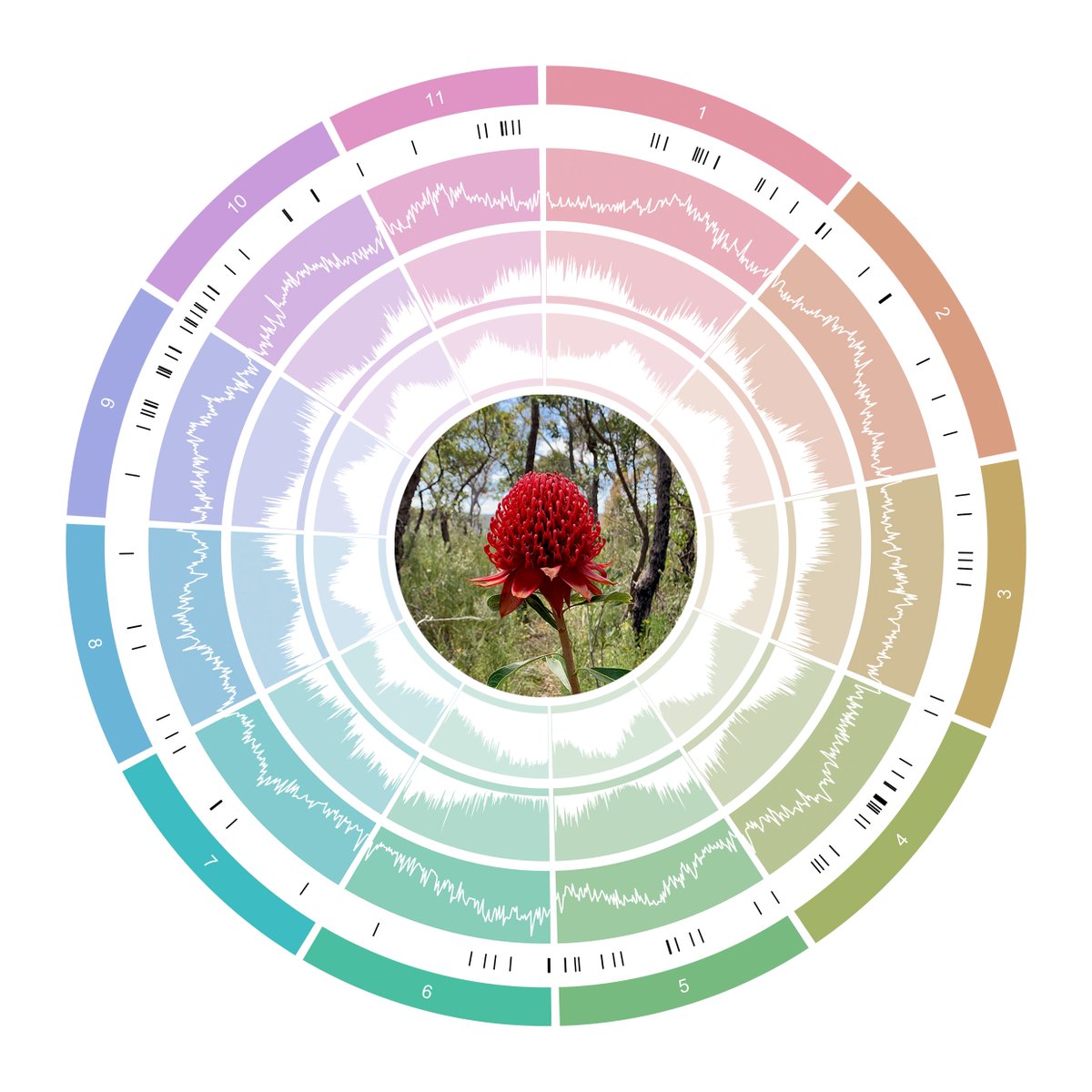
In this paper, we present a chromosome-level assembly for the NSW State Floral Emblem, the New South Wales waratah, Telopea speciosissima. This joins macadamia as the 2nd reference genome for the Proteaceae family & should help future studies for the remaining ca. 1700 species.

The genome was assembled from a ONT chassis, scaffolded with 10x Genomics linked reads and Phase Genomics HiC - made possible thanks to quality data from AGRF and the Ramaciotti Centre for Genomics. The final assembly was chromosome-level, with 94.1% on the 11 chromosomes (2n = 22).

As well as the assembly itself, the paper presents a three genomics tools that we hope will be helpful for other assemblies:

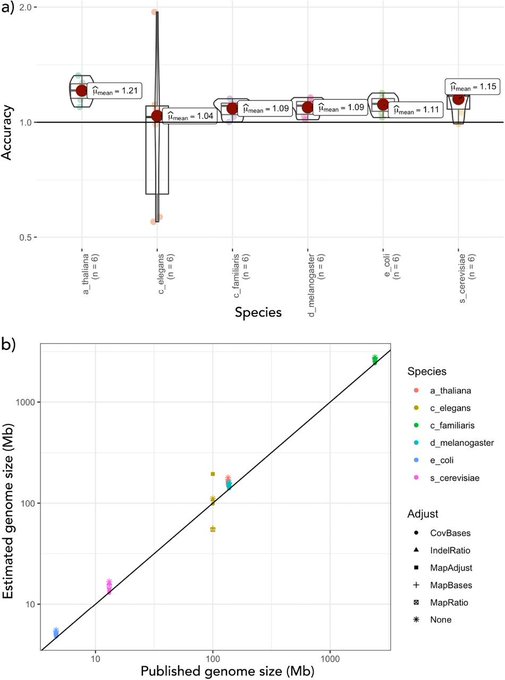
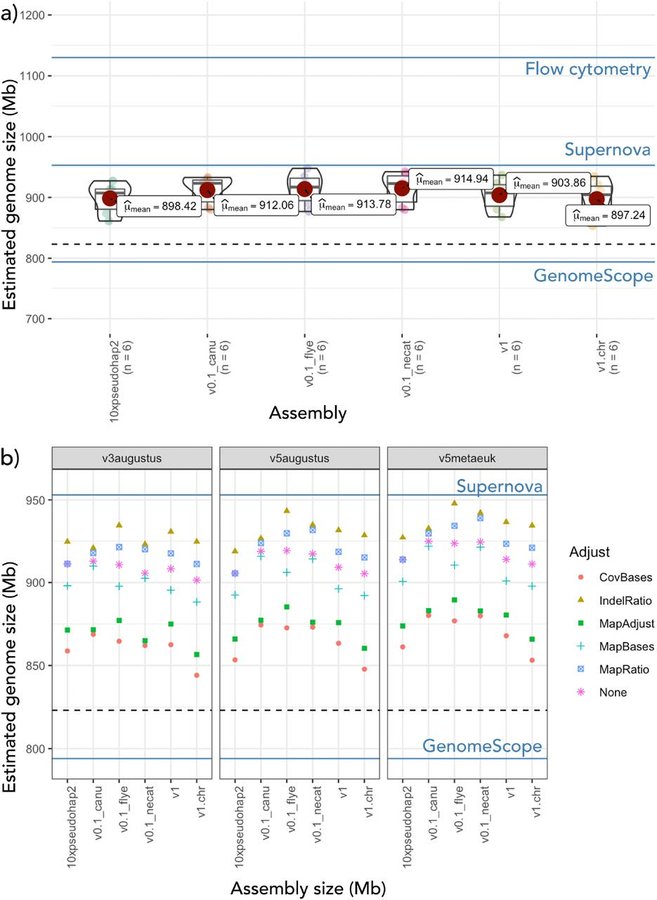
1. DepthSizer uses long-read depths and BUSCO predictions to estimate genome size. We estimated the waratah genome to be ca. 900 Mbp - bigger than kmer estimates, but smaller than flow cytometry of Tasmanian waratah.

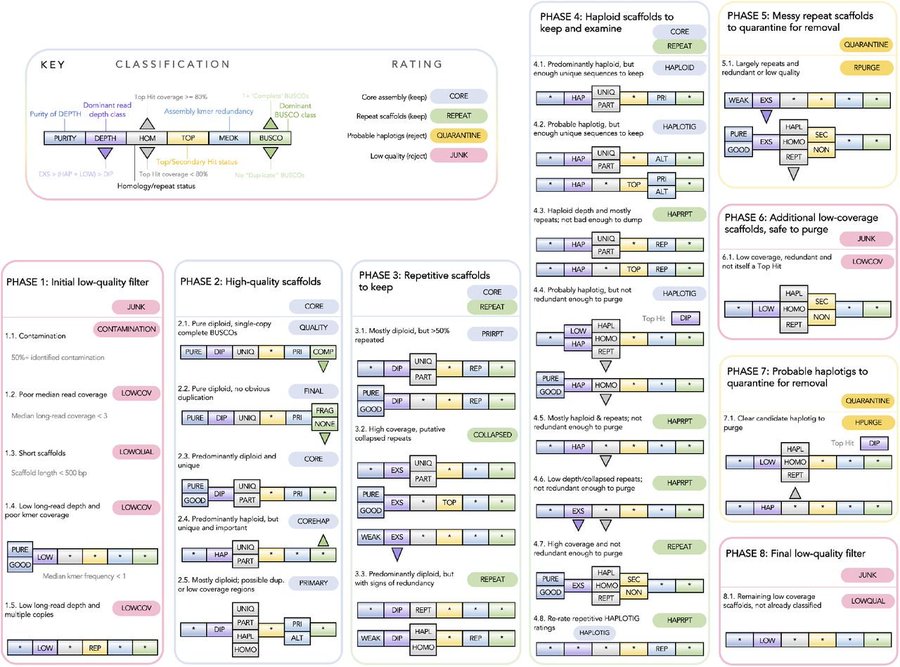
2. Diploidocus builds on Purge Haplotigs, combining read depths, kmer frequencies & BUSCO predictions to classify and curate/filter assembly scaffolds. This decreases false duplications & contamination, and flags collapsed repeats for closer inspection.

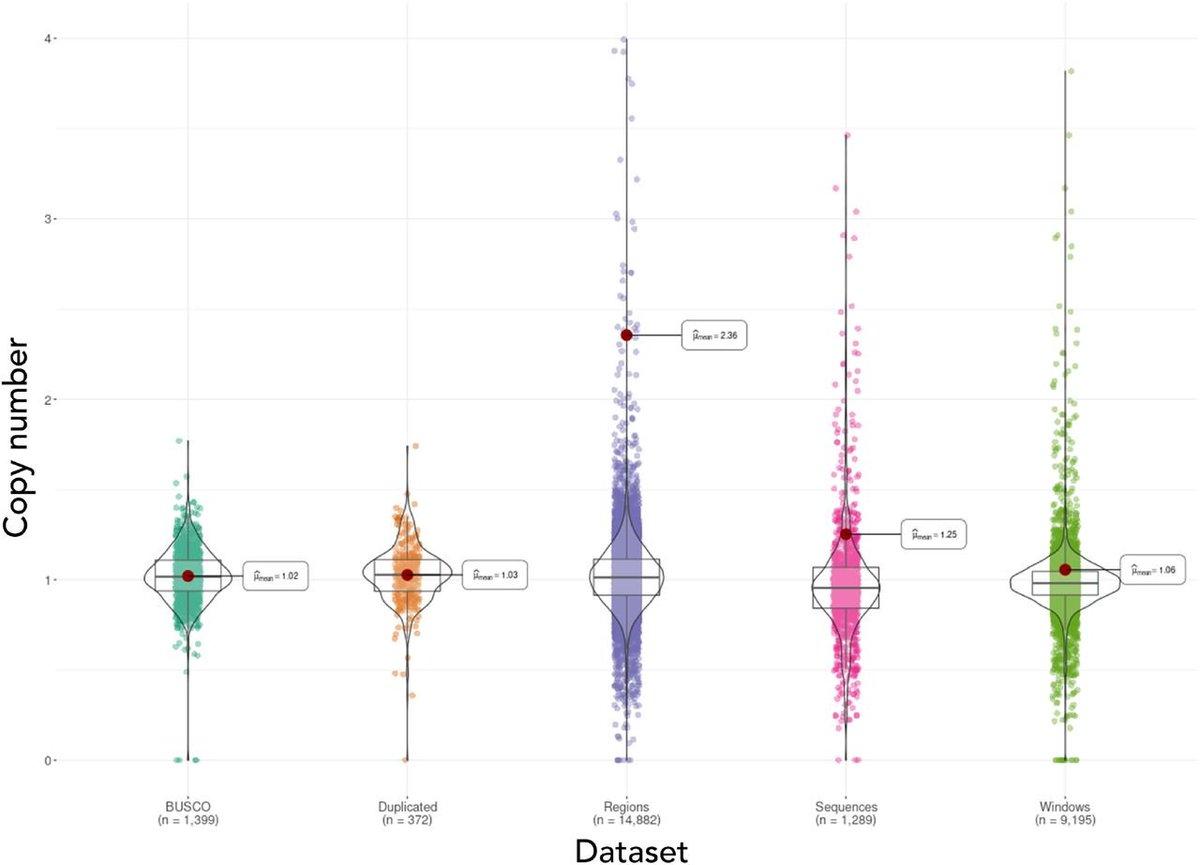
3. DepthKopy uses BUSCO Complete genes to establish sequencing depth (like DepthSizer) and then estimates copy number for regions (e.g. genes), scaffolds & sliding windows of the assembly. This showed that most “Duplicated” BUSCOs are real duplicates.


Chen SH, Rossetto M, van der Merwe M, Lu-Irving P, Yap JS, Sauquet H, Bourke G, Amos TG, Bragg JG & Edwards RJ (accepted): Chromosome-level de novo genome assembly of Telopea speciosissima (New South Wales waratah) using long-reads, linked-reads and Hi-C. Molecular Ecology Resources.
[Mol Ecol Res] [bioRxiv]

Abstract

Telopea speciosissima, the New South Wales waratah, is an Australian endemic woody shrub in the family Proteaceae. Waratahs have great potential as a model clade to better understand processes of speciation, introgression and adaptation, and are significant from a horticultural perspective. Here, we report the first chromosome-level genome for T. speciosissima. Combining Oxford Nanopore long-reads, 10x Genomics Chromium linked-reads and Hi-C data, the assembly spans 823 Mb (scaffold N50 of 69.0 Mb) with 97.8% of Embryophyta BUSCOs “Complete”. We present a new method in Diploidocus (https://github.com/slimsuite/diploidocus) for classifying, curating and QC-filtering scaffolds, which combines read depths, k-mer frequencies and BUSCO predictions. We also present a new tool, DepthSizer (https://github.com/slimsuite/depthsizer), for genome size estimation from the read depth of single-copy orthologues and estimate the genome size to be approximately 900 Mb. The largest 11 scaffolds contained 94.1% of the assembly, conforming to the expected number of chromosomes (2n = 22). Genome annotation predicted 40,158 protein-coding genes, 351 rRNAs and 728 tRNAs. We investigated CYCLOIDEA (CYC) genes, which have a role in determination of floral symmetry, and confirm the presence of two copies in the genome. Read depth analysis of 180 “Duplicated” BUSCO genes using a new tool, DepthKopy (https://github.com/slimsuite/depthkopy), suggests almost all are real duplications, increasing confidence in the annotation and highlighting a possible need to revise the BUSCO set for this lineage. The chromosome-level T. speciosissima reference genome (Tspe_v1) provides an important new genomic resource of Proteaceae to support the conservation of flora in Australia and further afield.

If you want a read and don’t have access, please get it touch or check out the bioRxiv preprint.

Thursday, 3 June 2021

Chromosome-level de novo genome assembly of Telopea speciosissima (New South Wales waratah) using long-reads, linked-reads and Hi-C

The latest genomics paper from the lab is now out on bioRvix. This is the first paper from Stephanie Chen’s PhD project in collaboration with the Royal Botanic Gardens and Domain Trust (RBGDT), Sydney. In this paper, Stephanie reports on the chromosome-level assembly of the New South Wales Waratah, the floral emblem of NSW. This is the first of the pilot reference genomes to be released from the Genomics for Australian Plants initiative.

In addition to the genome itself, this paper describes a couple of genomics tools from the lab. DepthSizer (https://github.com/slimsuite/depthsizer) uses BUSCO predictions to establish the single-copy read depth of sequencing data, from which the genome size can be estimated in a way that is hopefully quite robust to assembly quality. Diploidocus (https://github.com/slimsuite/diploidocus) has been used for our previous Dog genome assemblies to help eliminate “haplotigs” (heterozygous regions of the genome that appear in the assembly twice), and low-quality sequences, in addition to flagging possible collapsed repeats or contaminants for further investigation. Here, the Diploidocus “tidy” pipeline is considerably extended for a much more nuanced classification and filtering of scaffolds, using a combination of read depths, homology, kmer analysis and BUSCO predictions.


Chen SH, Rossetto M, van der Merwe M, Lu-Irving P, Yap JS, Sauquet H, Bourke G, Bragg JG & Edwards RJ (preprint): Chromosome-level de novo genome assembly of Telopea speciosissima (New South Wales waratah) using long-reads, linked-reads and Hi-C. bioRxiv 2021.06.02.444084; doi: 10.1101/2021.06.02.444084.
[bioRxiv]

Abstract

Background: Telopea speciosissima, the New South Wales waratah, is Australian endemic woody shrub in the family Proteaceae. Waratahs have great potential as a model clade to better understand processes of speciation, introgression and adaptation, and are significant from a horticultural perspective. Findings: Here, we report the first chromosome-level reference genome for T. speciosissima. Combining Oxford Nanopore long-reads, 10x Genomics Chromium linked-reads and Hi-C data, the assembly spans 823 Mb (scaffold N50 of 69.0 Mb) with 91.2 % of Embryophyta BUSCOs complete. We introduce a new method in Diploidocus (https://github.com/slimsuite/diploidocus) for classifying, curating and QC-filtering assembly scaffolds. We also present a new tool, DepthSizer (https://github.com/slimsuite/depthsizer), for genome size estimation from the read depth of single copy orthologues and find that the assembly is 93.9 % of the estimated genome size. The largest 11 scaffolds contained 94.1 % of the assembly, conforming to the expected number of chromosomes (2n = 22). Genome annotation predicted 40,158 protein-coding genes, 351 rRNAs and 728 tRNAs. Our results indicate that the waratah genome is highly repetitive, with a repeat content of 62.3 %. Conclusions: The T. speciosissima genome (Tspe_v1) will accelerate waratah evolutionary genomics and facilitate marker assisted approaches for breeding. Broadly, it represents an important new genomic resource of Proteaceae to support the conservation of flora in Australia and further afield.

Friday, 4 September 2020

We are recruiting! Two year Postdoc available in plant conservation genomics

We have a two year full time postdoc position available to conduct bioinformatics, laboratory and field research in the area of conservation genomics as part of ARC Linkage Project LP180100721, and assist in the supervision of honours and postgraduate research students as required. This is a collaborative project between the University of New South Wales, Royal Botanic Gardens Sydney and the Australian National University to develop approaches for the conservation of plant species that are threatened by a fungal pathogen (Austropuccinia psidii, the cause of myrtle rust). Techniques involved include but are not limited to field collection of plant material, DNA extraction, plant growth experiments, execution of software for bioinformatic and statistical analyses.

More details can be found on the UNSW jobs site here: https://external-careers.jobs.unsw.edu.au/cw/en/job/499957/postdoctoral-research-associate. Informal enquiries are welcome if you want to know more about the project.

Tuesday, 9 July 2019

We’ve been funded! ARC Linkage - Optimising plant populations for ecological restoration and resilience

We are very happy to report another successful ARC Linkage grant application.

LP180100721: Optimising plant populations for ecological restoration and resilience

Dr Richard Edwards; Professor Justin Borevitz; Dr Jason Bragg; Dr Maurizio Rossetto; Dr Brett Summerell; Dr Marlien van der Merwe

When choosing individual plants for restoration populations, there is potentially a trade-off between maximising genetic diversity (‘adaptability’) and selection for desirable properties (‘adaptation’). This project aims to develop pioneering methods to quantify this trade-off, and facilitate the design of optimised populations, with a focus on two Australian rainforest trees that are being impacted by myrtle rust infection: Rhodamnia argentea and Rhodamnia rubescens. By studying the genetic variation in each species, and how this relates to myrtle rust resistance and climate, this project aims to design populations that are genetically diverse, maximally resistant to myrtle rust, and adapted to future climate.

We are collaborating with the Royal Botanic Garden and Domain Trust to apply genomics to challenges of conservation for rainforest trees in the face of climate change and invasive pathogens.

There will be job and studentship opportunities associated with this grant, so watch this space (or get in touch)!

Monday, 27 May 2019

Stephanie Chen (PhD student)

Stephanie H. Chen joined the Edwards Lab at UNSW as a PhD student in May 2019. She is working on a collaborative project with the Royal Botanic Garden and Domain Trust and is co-supervised by Richard Edwards and Jason Bragg. Her research focuses on landscape genomics of Myrtaceae species (includes eucalypts, paperbarks, and tea-trees) and the genetic basis of resistance to myrtle rust, which is of pressing concern to Australia’s native biodiversity. She is also contributing to assembling and annotating the waratah (Telopea speciosissima) genome as part of the Genomics for Australian Plants Framework Initiative.

Stephanie holds a Bachelor of Science (Honours) (First Class Honours and the University Medal) from the University of Sydney, Australia, with a major in Plant Science.

[LinkedIn]

Monday, 17 December 2018

What are we sequencing next? The waratah!

Thanks to seed funding from the UNSW, we were able to sequence two rainforest tree species earlier this year in collaboration with the Royal Botanic Gardens and Domain Trust (RBGDT), Sydney. I am pleased to announce that, together with RBGDT and the Blue Mountains Botanic Garden, Mt Tomah, we won a bid to sequence one of the first genomes as part of the new Genomics for Australian Plants Framework Initiative by Bioplatforms Australia: the NSW state flower, the Waratah (Telopea speciosissima).

As announced recently, this is one of three species selected for the initial pilot study. Details will be sorted out in the new year, but we will be looking to use a combination of 10x Genomics linked reads and long-read sequencing (PacBio and/or Nanopore).

Collaborators on the project: M Rossetto1, M van der Merwe1, H Sauquet1, P Lu-Irving1, J Bragg1, G Bourke2, RJ Edwards3

  1. Royal Botanic Gardens and Domain Trust, Sydney
  2. Blue Mountains Botanic Garden, Mt Tomah
  3. The University of New South Wales, Sydney

Image: Telopea speciosissima, Suellen’s Garden, Falls Ck NSW: Photo, Suellen Harris