Showing posts with label genome size. Show all posts

Friday, 14 January 2022

The Waratah genome paper is out!

The final version of the waratah genome paper now out in Molecular Ecology Resources. This was a fun collaboration with the Royal Botanic Gardens and Domain Trust as one of the pilot genomes for BioPlatforms Australia’s Genomics for Australian Plants (GAP) initiative.

You can read the press release here, or our piece in the Conversation, We’ve unveiled the waratah’s genetic secrets, helping preserve this Australian icon for the future.

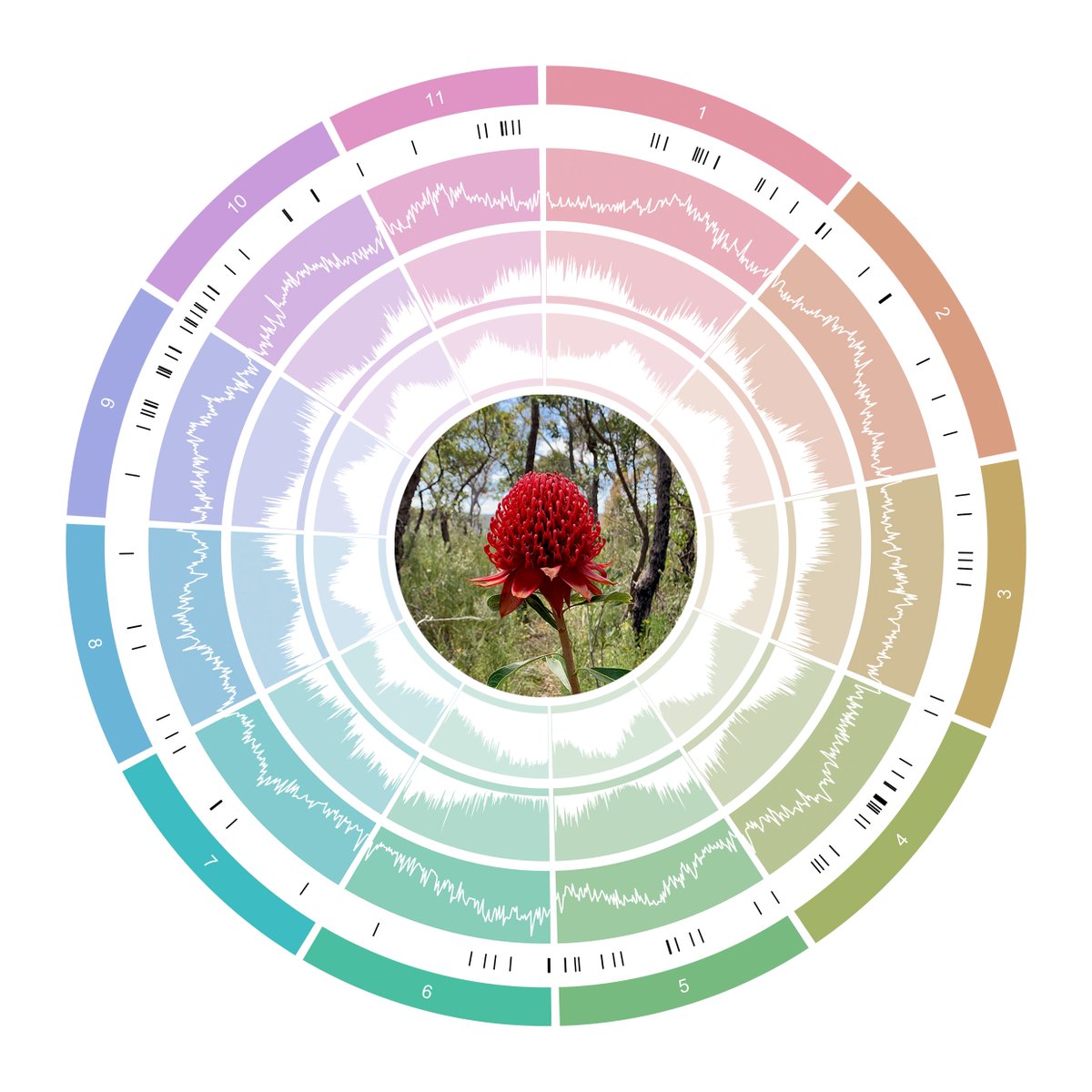
In this paper, we present a chromosome-level assembly for the NSW State Floral Emblem, the New South Wales waratah, Telopea speciosissima. This joins macadamia as the 2nd reference genome for the Proteaceae family & should help future studies for the remaining ca. 1700 species.

The genome was assembled from a ONT chassis, scaffolded with 10x Genomics linked reads and Phase Genomics HiC - made possible thanks to quality data from AGRF and the Ramaciotti Centre for Genomics. The final assembly was chromosome-level, with 94.1% on the 11 chromosomes (2n = 22).

As well as the assembly itself, the paper presents a three genomics tools that we hope will be helpful for other assemblies:

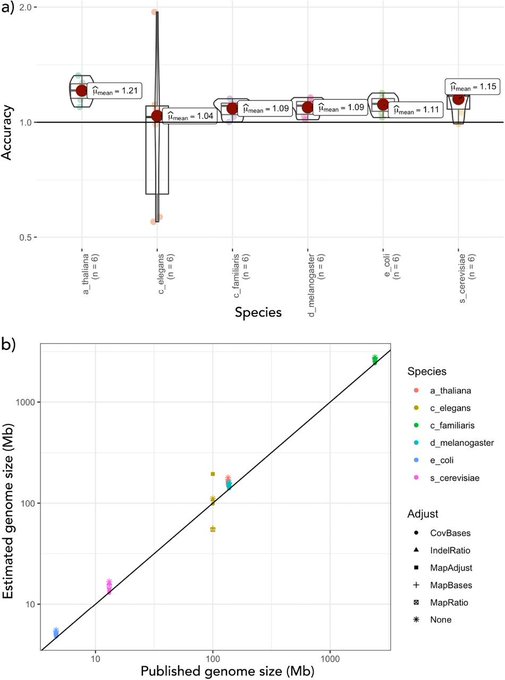
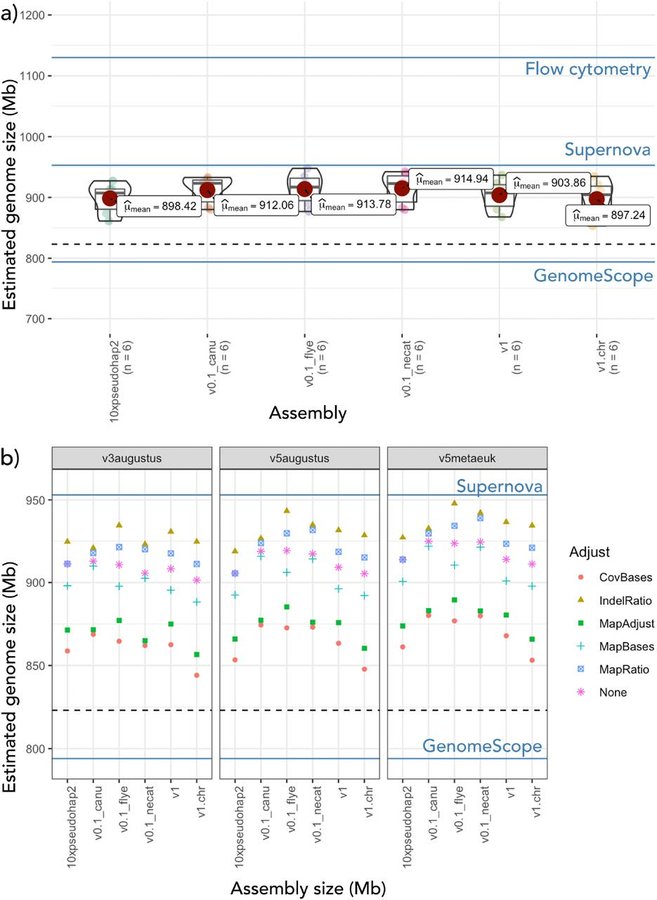
1. DepthSizer uses long-read depths and BUSCO predictions to estimate genome size. We estimated the waratah genome to be ca. 900 Mbp - bigger than kmer estimates, but smaller than flow cytometry of Tasmanian waratah.

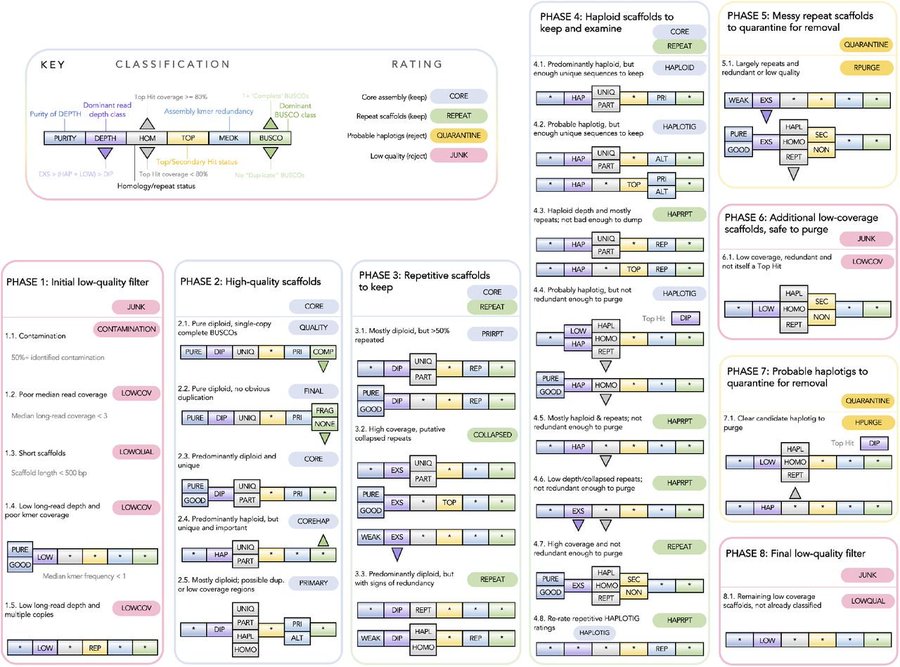
2. Diploidocus builds on Purge Haplotigs, combining read depths, kmer frequencies & BUSCO predictions to classify and curate/filter assembly scaffolds. This decreases false duplications & contamination, and flags collapsed repeats for closer inspection.

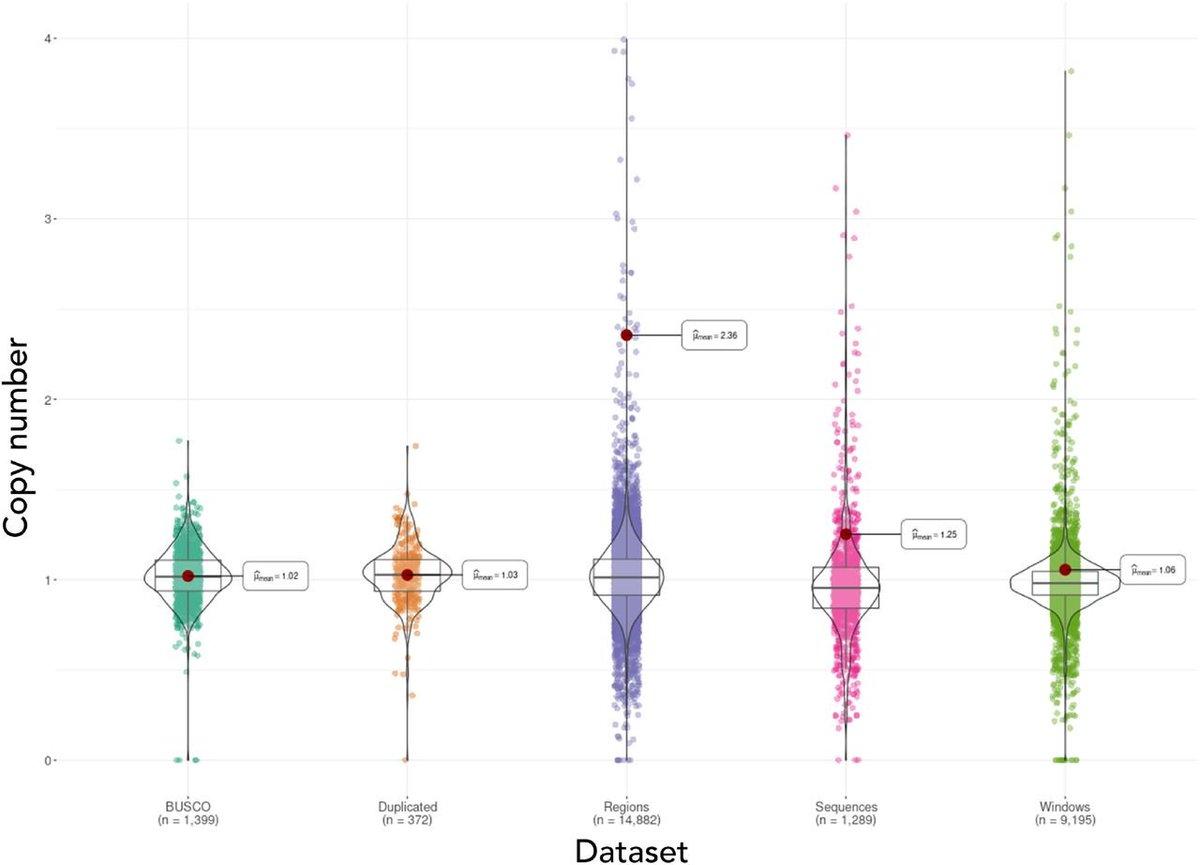
3. DepthKopy uses BUSCO Complete genes to establish sequencing depth (like DepthSizer) and then estimates copy number for regions (e.g. genes), scaffolds & sliding windows of the assembly. This showed that most “Duplicated” BUSCOs are real duplicates.


Chen SH, Rossetto M, van der Merwe M, Lu-Irving P, Yap JS, Sauquet H, Bourke G, Amos TG, Bragg JG & Edwards RJ (accepted): Chromosome-level de novo genome assembly of Telopea speciosissima (New South Wales waratah) using long-reads, linked-reads and Hi-C. Molecular Ecology Resources.
[Mol Ecol Res] [bioRxiv]

Abstract

Telopea speciosissima, the New South Wales waratah, is an Australian endemic woody shrub in the family Proteaceae. Waratahs have great potential as a model clade to better understand processes of speciation, introgression and adaptation, and are significant from a horticultural perspective. Here, we report the first chromosome-level genome for T. speciosissima. Combining Oxford Nanopore long-reads, 10x Genomics Chromium linked-reads and Hi-C data, the assembly spans 823 Mb (scaffold N50 of 69.0 Mb) with 97.8% of Embryophyta BUSCOs “Complete”. We present a new method in Diploidocus (https://github.com/slimsuite/diploidocus) for classifying, curating and QC-filtering scaffolds, which combines read depths, k-mer frequencies and BUSCO predictions. We also present a new tool, DepthSizer (https://github.com/slimsuite/depthsizer), for genome size estimation from the read depth of single-copy orthologues and estimate the genome size to be approximately 900 Mb. The largest 11 scaffolds contained 94.1% of the assembly, conforming to the expected number of chromosomes (2n = 22). Genome annotation predicted 40,158 protein-coding genes, 351 rRNAs and 728 tRNAs. We investigated CYCLOIDEA (CYC) genes, which have a role in determination of floral symmetry, and confirm the presence of two copies in the genome. Read depth analysis of 180 “Duplicated” BUSCO genes using a new tool, DepthKopy (https://github.com/slimsuite/depthkopy), suggests almost all are real duplications, increasing confidence in the annotation and highlighting a possible need to revise the BUSCO set for this lineage. The chromosome-level T. speciosissima reference genome (Tspe_v1) provides an important new genomic resource of Proteaceae to support the conservation of flora in Australia and further afield.

If you want a read and don’t have access, please get it touch or check out the bioRxiv preprint.

Wednesday, 24 November 2021

#ABACBS2021 Lightning talk - DepthSizer and DepthKopy: genome size and copy number prediction using single-copy long-read depth profiles

Tune in for the ABACBS 2021 lightning talks this morning to hear about our applications of long reads to genome size and copy number prediction. For more information, you can read the NSW Waratah genome paper pre-print or visit the GitHub pages for DepthSizer and DepthKopy.

Richard J Edwards, Stephanie H Chen, Katarina C Stuart, Mark M Tanaka, Jason G Bragg.

DepthSizer and DepthKopy: genome size and copy number prediction using single-copy long-read depth profiles

A fundamental part of any genome project is establishing the genome size of the organism being sequenced. The gold standard for genome size measurement is flow cytometry, but this is not available to all groups and can give surprisingly variable results. Popular bioinformatic approaches predict genome size using kmer frequency profiles from high-accuracy (e.g. illumina or hifi) sequencing reads, or the mean depth of coverage reads mapped to an assembly. Both of these approaches can be adversely affected by repetitive regions of the genome. Mean sequencing depth is also highly reliant on assembly completeness.

Here, we present DepthSizer (https://github.com/slimsuite/depthsizer), which refines this approach by estimating sequencing depth based on single-copy complete BUSCO genes. DepthSizer works on the principle that genuine single-copy regions will tend towards the same, true, single-copy read depth. In contrast, assembly errors, collapsed repeats within those genes, or incorrect BUSCO predictions, will give inconsistent read depth deviations. The modal read depth across single-copy BUSCO genes, calculated from a depth density profile of these regions, should therefore provide a good estimate of the true depth of coverage. The method is benchmarked on model organism data and corrections for possible contamination, biases/inconsistencies in read mapping and/or raw read insertion/deletion error profiles are discussed. We also present DepthKopy (https://github.com/slimsuite/depthkopy), which uses the same read depth approach to estimate the copy number of assembly regions. This can be useful for identifying haplotigs, and collapsed repeat regions.

Keywords: BUSCO, Genome Assembly, Genomics, ONT, PacBio, copy number variants

Thursday, 3 June 2021

Chromosome-level de novo genome assembly of Telopea speciosissima (New South Wales waratah) using long-reads, linked-reads and Hi-C

The latest genomics paper from the lab is now out on bioRvix. This is the first paper from Stephanie Chen’s PhD project in collaboration with the Royal Botanic Gardens and Domain Trust (RBGDT), Sydney. In this paper, Stephanie reports on the chromosome-level assembly of the New South Wales Waratah, the floral emblem of NSW. This is the first of the pilot reference genomes to be released from the Genomics for Australian Plants initiative.

In addition to the genome itself, this paper describes a couple of genomics tools from the lab. DepthSizer (https://github.com/slimsuite/depthsizer) uses BUSCO predictions to establish the single-copy read depth of sequencing data, from which the genome size can be estimated in a way that is hopefully quite robust to assembly quality. Diploidocus (https://github.com/slimsuite/diploidocus) has been used for our previous Dog genome assemblies to help eliminate “haplotigs” (heterozygous regions of the genome that appear in the assembly twice), and low-quality sequences, in addition to flagging possible collapsed repeats or contaminants for further investigation. Here, the Diploidocus “tidy” pipeline is considerably extended for a much more nuanced classification and filtering of scaffolds, using a combination of read depths, homology, kmer analysis and BUSCO predictions.


Chen SH, Rossetto M, van der Merwe M, Lu-Irving P, Yap JS, Sauquet H, Bourke G, Bragg JG & Edwards RJ (preprint): Chromosome-level de novo genome assembly of Telopea speciosissima (New South Wales waratah) using long-reads, linked-reads and Hi-C. bioRxiv 2021.06.02.444084; doi: 10.1101/2021.06.02.444084.
[bioRxiv]

Abstract

Background: Telopea speciosissima, the New South Wales waratah, is Australian endemic woody shrub in the family Proteaceae. Waratahs have great potential as a model clade to better understand processes of speciation, introgression and adaptation, and are significant from a horticultural perspective. Findings: Here, we report the first chromosome-level reference genome for T. speciosissima. Combining Oxford Nanopore long-reads, 10x Genomics Chromium linked-reads and Hi-C data, the assembly spans 823 Mb (scaffold N50 of 69.0 Mb) with 91.2 % of Embryophyta BUSCOs complete. We introduce a new method in Diploidocus (https://github.com/slimsuite/diploidocus) for classifying, curating and QC-filtering assembly scaffolds. We also present a new tool, DepthSizer (https://github.com/slimsuite/depthsizer), for genome size estimation from the read depth of single copy orthologues and find that the assembly is 93.9 % of the estimated genome size. The largest 11 scaffolds contained 94.1 % of the assembly, conforming to the expected number of chromosomes (2n = 22). Genome annotation predicted 40,158 protein-coding genes, 351 rRNAs and 728 tRNAs. Our results indicate that the waratah genome is highly repetitive, with a repeat content of 62.3 %. Conclusions: The T. speciosissima genome (Tspe_v1) will accelerate waratah evolutionary genomics and facilitate marker assisted approaches for breeding. Broadly, it represents an important new genomic resource of Proteaceae to support the conservation of flora in Australia and further afield.

Tuesday, 10 December 2019

Edwards Lab at GIW/ABACBS2019

The Edwards Lab and close affiliates have five posters at GIW-ABACBS2019 this year. Come and check them out during the two poster sesstions:


Poster #26: Comparative performance of long-read whole genome assembly tools in diploid eukaryotes

Åsa Pérez-Bercoff, Paris Thompson & Richard J. Edwards [PDF]

As long-read (single molecule) sequencing from Pacific Biosciences (PacBio) and Oxford Nanopore Technologies (ONT) is getting more common, more long-read assemblers are emerging. Whilst a few benchmarking studies have been performed, there is no clear “best” assembly tool, and the choice is often a combination of compute resource availability and anecdotal reports of relative performance in similar organisms. Here, we have de novo assembled PacBio long-read sequencing data from 13 diploid Saccharomyces cerevisiae (baker’s yeast) strains (11 diploid, 1 haploid and 1 tetraploid) using four different assemblers: Canu v1.8, Flye v2.4.2, WTDBG2 (a.k.a. Redbean) v2.4 and Ra v20181211. Assembly performance statistics have been generated by comparing assemblies to the reference yeast genome (SGD R64.2.1) using QUAST v5.0.2, and rating each assembly for accuracy, coverage, and contiguity.

The latest generation of assembly tools decide how to process reads based on a genome size parameter. For heterozygous diploid organisms, it is not clear whether this should be the haploid or diploid genome size, or something in-between based on heterozygosity. In this study, we used three genome size settings: haploid (13.1Mb), diploid (26.2Mb) and half-way in-between (19.65Mb). This will enable us to establish how the genome size parameter influences the quality of the resulting genome assembly.


Poster #33: Estimating genome size using long read depth profiles and single copy regions of draft genome assemblies

Timothy G Amos, Ziying Zhang & Richard J Edwards [PDF]

Estimating the size of a eukaryote genome is a fundamental task in genome assembly. As well as informing decisions on sequencing technology and depth, greater accuracy in genome size prediction can assist in assessing the completeness and duplication of a genome assembly. Genome sizes can be estimated through both experimental and genome sequencing approaches. Experimental methods include densitometry, flow cytometry analysis of stained nuclei and quantitative PCR (qPCR) of single copy genes. Genome sequencing approaches include short-read k-mer distributions. However, these methods can give variable results, and are prone to inaccurate predictions for genomes with abundant repetitive sequences.

Here, we show that the read depth of long reads in a draft genome can be used to provide a relatively accurate estimate of genome size across various model organisms. In general, diploid genome assemblies will consist of regions of haploid, diploid and incorrect (or multi-copy organelle) depth. Repeats and assembly errors are likely to be highly variable in terms of genome vs assembly copy number and, therefore, coverage. The modal read depth of conserved single copy orthologues should therefore approximate the sequencing depth of the input data, which can be extrapolated to estimate genome size. We found that our method can provide comparable, if not more accurate, estimates than short-read k-mer distributions.


Poster #92: Using genomics to reveal drivers of invasion success

Katarina Stuart, Lee Ann Rollins, William Sherwin, Richard Edwards, Natalie Hofmeister & Yuanyuan Cheng [PDF]

Invasive species are a global concern due to their negative impacts on the economy and local ecosystems. However, well-documented invasions provide a useful system in which to pose biologically interesting questions regarding short time scale evolution. Answering these questions will further our knowledge of evolutionary mechanisms, as well as inform specific management strategies for the invasive population. The European starling (Sturnus vulgaris) is a global pest that was introduced into Australia’s south-eastern states in the 1860’s and has since greatly expanded its range. Previous research on multiple introduced starling populations has demonstrated that their morphology has undergone subtle shifts following colonisation. My research applies a range of sequencing techniques to investigate genomic variation across Australia’s starling population. We are combining long-, short- and linked-read whole genome sequencing to assemble a high-quality starling reference genome. This genome will be annotated using Iso-seq long-read (PacBio) whole transcriptome sequencing in order to properly identify putatively evolving loci. Population sequencing data (whole genome and DArTSeq) will be mapped onto this reference to identify functional SNPs and reveal potential drivers of the rapid phenotypic divergences across the Australian population.


Poster #93: Advancing genomic resources for myrtle rust research and management

Stephanie Chen, Jason Bragg & Richard Edwards [PDF]

Myrtle rust is a plant disease caused by an invasive fungal pathogen (Austropuccinia psidii) first detected in Australia in 2010. Over 350 native species from the family Myrtaceae, which includes eucalypts, paperbarks, tea-trees, and lillipillies, are known hosts. Detailed genetic information needed for an effective and coordinated response encompassing conservation management is lacking. We performed de novo genome assembly and annotation for two species which exhibit a spectrum of resistance – Rhodamnia argentea (malletwood) and Syzygium oleosum (blue lilly pilly). Reference genomes have been generated using 10X linked reads, and are being supplemented with long reads and a hybrid assembly approach. These genomes will complement reduced representation sequencing (DArTseq) and rust resistance assays from different genotypes across the landscape. Together, these data will facilitate the characterisation of genetic structure and rust resistance across space as well as within and among species. This research is crucial for the management of at-risk species through optimising methods of improving disease resistance and adaptation to future climates in addition to increasing our understanding of myrtle rust which is a pressing concern to native biodiversity.


Poster #168: BUSCOMP: BUSCO Compilation and Comparison for Assessing Completeness in Multiple Genome Assemblies

Richard J. Edwards [PDF]

Advances in DNA sequencing technology and bioinformatics tools have placed de novo genome assembly of complex organisms firmly in the domain of individual labs and small consortia. Nevertheless, the assemblies produced are often fragmented and incomplete. Optimal assembly depends on the size, repeat landscape, ploidy and heterozygosity of the genome, which are often unknown. It is therefore common practice to try multiple strategies, and there is a bottleneck in assessing and comparing assemblies.

BUSCO [1] is a powerful and popular tool that estimates genome completeness using gene prediction and curated models of single-copy protein orthologues. However, results can be counterintuitive: adding/removing scaffolds can alter BUSCO predictions elsewhere in the assembly, while low sequence quality may reduce “completeness” scores and miss genes that are present in the assembly [2].

BUSCOMP (BUSCO Compilation and Comparison) complements BUSCO to identify/overcome these issues. BUSCOMP compiles a non-redundant set of the highest-scoring single-copy BUSCO complete sequences, rapidly searches these against assemblies, and robustly re-rates genes as Complete (Single/Duplicated), Fragmented/Partial or Missing. On test data from three organisms (yeast, cane toad and mainland tiger snake), BUSCOMP (1) gives consistent results when re-running the same assembly, (2) is not affected by adding or removing non-BUSCO-containing scaffolds, and (3) is minimally affected by assembly quality. This makes BUSCOMP ideal to run alongside BUSCO when trying to compare and rank genome assemblies, even in the absence of error-correction.

Available at: https://github.com/slimsuite/buscomp.

  1. Simão FA et al. (2015) Bioinformatics 31:3210–3212
  2. Edwards RJ et al. (2018) GigaScience 7:giy095