Monday, 27 January 2025

A reference genome for the eastern bettong (Bettongia gaimardi)

Silver LW, Edwards RJ, Neaves L,A Manning, CJ Hogg & S Banks (2025): A reference genome for the eastern bettong (Bettongia gaimardi) [version 2; peer review: 3 approved]. F1000Research 13:1544. [F1000Res] [PubMed]

Abstract

The eastern or Tasmanian bettong (Bettongia gaimardi) is one of four extant bettong species and is listed as ‘Near Threatened’ by the IUCN. We sequenced short read data on the 10x system to generate a reference genome 3.46Gb in size and contig N50 of 87.36Kb and scaffold N50 of 2.93Mb. Additionally, we used GeMoMa to provide and accompanying annotation for the reference genome. The generation of a reference genome for the eastern bettong provides a vital resource for the conservation of the species.

Tuesday, 17 December 2024

Parental assigned chromosomes for cultivated cacao provides insights into genetic architecture underlying resistance to vascular streak dieback

As a big fan of chocolate, it was great to have the opportunity to help out with a cacao genome. This study presents the first diploid, fully scaffolded, and parentally phased genome resource for Theobroma cacao L. to provide insights into the genetic architecture underlying resistance and susceptibility to vascular streak dieback (VSD), a significant threat to cacao production in Southeast Asia and Melanesia. By analyzing NLR gene clusters and other disease response gene candidates in proximity to informative QTLs, the research identifies structural variants within NLRs inherited from resistant and susceptible parents, offering potential breeding targets for VSD resistance.

Tobias PA, Downs J, Epaina P, Singh G, Park RF, Edwards RJ, Brugman E, Zulkifli A, Muhammad J, Purwantara A & Guest DI (2024): Parental assigned chromosomes for cultivated cacao provides insights into genetic architecture underlying resistance to vascular streak dieback. The Plant Genome doi: 10.1002/tpg2.20524. [Plant Genome] [bioRxiv] [PubMed]

Abstract

Diseases of Theobroma cacao L. (Malvaceae) disrupt cocoa bean supply and economically impact growers. Vascular streak dieback (VSD), caused by Ceratobasidium theobromae, is a new encounter disease of cacao currently contained to southeast Asia and Melanesia. Resistance to VSD has been tested with large progeny trials in Sulawesi, Indonesia, and in Papua New Guinea with the identification of informative quantitative trait loci (QTLs). Using a VSD susceptible progeny tree (clone 26), derived from a resistant and susceptible parental cross, we assembled the genome to chromosome-level and discriminated alleles inherited from either resistant or susceptible parents. The parentally phased genomes were annotated for all predicted genes and then specifically for resistance genes of the nucleotide-binding site leucine-rich repeat class (NLR). On investigation, we determined the presence of NLR clusters and other potential disease response gene candidates in proximity to informative QTLs. We identified structural variants within NLRs inherited from parentals. We present the first diploid, fully scaffolded, and parentally phased genome resource for T. cacao L. and provide insights into the genetics underlying resistance and susceptibility to VSD.

#AusEvol2024 - Depth-based correction of gene duplications and losses in genome assemblies

The Australasian Evolution Society conference has always been one of my favourites, due to its laid back culture of inclusivity and kindness. (And low cost!) It therefore feels quite fitting that my last conference as an Aussie academic was AES2024.

This talk was a bit of an update from my AES2021 presentation. This showcased some of the latest additions to DepthKopy, including depth-based copy number correction of genome features, such as rDNA genes, repeat families, or multicopy genes. This includes a feature that classifies multicopy “Duplicated” genes identified by BUSCO as true (biological) or false (artefactual) duplicates. TL/DR version: analysis of draft genome assemblies for 45 species of fish across five different depths/qualities indicates that DepthKopy can correct the copy number and total length of multicopy features to within 10% of the true number. (The lower-quality raw assemblies ranged from a 30% under-estimate to a 60% over-estimate.)

This will be of most importance when low quality draft genomes are included in a comparative genomics analysis. However, even the best genome assemblies appear to have some “collapsed” or duplicated loci where the copy number in the assembly does not accurately reflect the copy number in the genome. DepthKopy is useful for exploring the magnitude of such disparities, and can help to identify and correct specific disrepancies in genes or features of interest.

Tuesday, 3 December 2024

So long, Ocean Genomes... and thanks for all the fish!

After a successful couple of years, today was my last day at UWA. I am proud of the team that I helped to build at the Minderoo Oceanomics Centre at UWA, and the things we have accomplished together. The UWA Oceans Institute has been a fantastic place to work, and I look forward to completing some exciting ongoing collaborations in my capacity as adjunct. It's been exciting to see Ocean Genomes grow from a concept with a largely empty lab to a fully-fledged genome factory capable of generating multiple high-quality genomes a week. The associated publications should hopefully be following soon, and I look forward to continued collaboration with the team as an Oceans Institute adjunct.

Developments in DNA sequencing technology over the past few years have been immense, but the most impressive part for me has been witnessing the laboratory technical team optimising the sample preparations for sequencing. Everything gets so much harder when you move from human samples (the focus of most methods development and testing) into non-model organisms, and I am convinced that the quality of genomes we’ve been producing is in large part due to the quality of the DNA going into the sequencers.

I am now looking for my next challenge and am officially Open For Work. We’ll be moving back to Dublin at the end of January. If you are based in Ireland and need an experienced interdisciplinary problem solver with broad expertise across bioinformatics and biomolecular science, please get in touch! Academic and non-academic opportunities are welcome.

Wednesday, 20 November 2024

Adventures in genome assembly curation and QC

It was great to have the opportunity to present some recent - and not so recent - work today to the Australian BioCommons Genomics Community meeting. You can find a link to the recording here, and the slides are up here if you missed it and are curious. I’ll add some additional links to the tools discussed with time.

One of the highlights of my time in Australia has been the awesome bioinformatics and genomics (and other) communities. I’ve been lucky to meet and work with so many awesome scientists and fantastic human beings.

Saturday, 16 November 2024

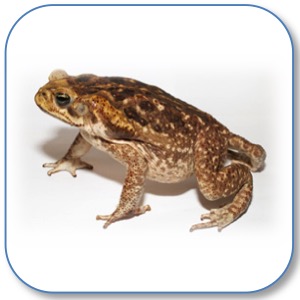
Repeat-Rich Regions Cause False-Positive Detection of NUMTs: A Case Study in Amphibians Using an Improved Cane Toad Reference Genome

Version 3* of the cane toad reference genome, aRhiMar1.3 is now officially out and published in Genome Biology and Evolution. [*It’s only the second published genome but for internal reasons the original draft genome was version 2!].

The focus of the paper itself is confirming the lack of Nuclear Mitochondrial fragments (a.k.a. NUMTs) in the cane toad genome, which could impact whole-mitogenome analysis of genetic diversity in cane toads. We were pretty surprised when we first looked for NUMTs in the cane toad genome and could not find any! The draft genome is pretty drafty, especially in terms of missing repetitive regions, so an updated long-read assembly was important to rule out a false negative result.

The new genome is in much better shape, with an extra 922 Mbp (>95% repeats) and a 15x increase in scaffold N50 (2.5 Mbp). (My biggest regret with the original paper was not sticking to my guns and including an early DepthSizer genome size estimate of 3.5 Mbp, which has subsequently turned out to be correct.) The cane toad genome remains a tough nut to crack, and we didn’t quite reach the magic 1Mb contig N50 (860 kb), but the functional completeness was markedly improved and we are pretty confident that the continued absence of NUMT detection is a real phenomenom and does not simply reflect technical limitations.

Watch this space for a chromosome-level cane toad genome, which is still in the works.

Cheung K, Rollins LA, Hammond JM, Barton K, Ferguson JM, Eyck HJF, Shine R & Edwards RJ (2024): Repeat-rich regions cause false positive detection of NUMTs - a case study in amphibians using an improved cane toad reference genome. Genome Biology and Evolution evae246. [Gen Biol Evol] [bioRxiv] [PubMed]

Mitochondrial DNA (mtDNA) has been widely used in genetics research for decades. Contamination from nuclear DNA of mitochondrial origin (NUMTs) can confound studies of phylogenetic relationships and mtDNA heteroplasmy. Homology searches with mtDNA are widely used to detect NUMTs in the nuclear genome. Nevertheless, false-positive detection of NUMTs is common when handling repeat-rich sequences, while fragmented genomes might result in missing true NUMTs. In this study, we investigated different NUMT detection methods and how the quality of the genome assembly affects them. We presented an improved nuclear genome assembly (aRhiMar1.3) of the invasive cane toad (Rhinella marina) with additional long-read Nanopore and 10× linked-read sequencing. The final assembly was 3.47 Gb in length with 91.3% of tetrapod universal single-copy orthologs (n = 5,310), indicating the gene-containing regions were well assembled. We used 3 complementary methods (NUMTFinder, dinumt, and PALMER) to study the NUMT landscape of the cane toad genome. All 3 methods yielded consistent results, showing very few NUMTs in the cane toad genome. Furthermore, we expanded NUMT detection analyses to other amphibians and confirmed a weak relationship between genome size and the number of NUMTs present in the nuclear genome. Amphibians are repeat-rich, and we show that the number of NUMTs found in highly repetitive genomes is prone to inflation when using homology-based detection without filters. Together, this study provides an exemplar of how to robustly identify NUMTs in complex genomes when confounding effects on mtDNA analyses are a concern.

Tuesday, 5 November 2024

#ABACBS2024 Poster 102: Improving phased Hifiasm assemblies with 20 kb ONT reads

After a great presentation this morning by Emma de Jong on our High-Quality Genomes for Australian Lutjanidae Species (abstract below), if you’re at ABACBS2024 then please drop by Poster #102 to find out about some of the work we’re doing with ONT data.

Abstracts

Improving phased Hifiasm assemblies with 20 kb ONT reads

Richard J Edwards, Adrianne Doran, Emma de Jong, Lara Parata, Shannon Corrigan

The quality and quantity of genome assembly has improved dramatically over recent years. Many large-scale genome projects combine assembly of HiFi and HiC reads using Hifiasm to produce contiguous phased assemblies, scaffolded to chromosome-level. Nevertheless, HiFi reads are typically under 25 kb and can still struggle to assemble long, low diversity repeat regions. Obtaining ultra-long (100 kb or longer) ONT reads to solve this problem remains a significant challenge due to technical constraints and DNA sample requirements. Here, we explore the utility of using standard ONT long reads (20 kb or more) as “ultra-long” input to improve phased Hifiasm assemblies for 22 species of bony fish (Genome Size, 627 Mb 1.54 Gb). We also explore whether the new --telo-m mode in Hifiasm v0.9.0 improves telomere prediction. Incorporating 20kb+ ONT reads (7.8X 93.5X) significantly increased assembly contiguity. BUSCO Completeness was not significantly altered, although there was some re-partitioning of BUSCO genes between phased haplotypes for some species. Improvement did not strongly correlate with read depth (either HiFi or ONT), suggesting that the underlying read length distributions and/or specific genome features are more important for determining the outcome. Hifiasm --telo-m mode significantly increased telomere recovery, assembling over six times the number of gapless telomere-to-telomere chromosomes when combined with 20kb+ ONT reads. Verification of how these results translate to the ease of curation and/or quality of final HiC-scaffolded chromosome-level assemblies is ongoing, with a goal to determine whether the additional sample preparation and sequencing in the lab is cost-effective.

High-Quality Genomes for Australian Lutjanidae Species

Emma de Jong, Lara Parata, Philipp E Bayer, Shannon Corrigan, Richard J Edwards

Lutjanidae (snappers) are highly valued in commercial and recreational fisheries worldwide and serve as indicator species of the health of marine environments and fishery bioregions in Western Australia. Comprehensive genomic mapping of immune gene families of Lutjanidae species are lacking, but this information is critical for understanding disease vulnerability, the impact of environmental stress, improving aquaculture efforts and to provide insights into the health of wild populations. Despite their importance, only 3 out of 113 Lutjanid species currently have available reference genomes, two of which are highly fragmented (>11,000 and >200,000 contigs), impacting studies on gene families relevant to aquaculture. In this study, we present high-quality chromosome-level reference genomes for 14 Australian Lutjanidae species across seven genera, generated using HiFi and HiC data. We present initial comparative genomic analyses, including immune gene content and chromosomal synteny analyses across species. These analyses provide insights into the genomic architecture and evolutionary relationships within Lutjanidae. Ongoing work aims to comprehensively map and compare the immune gene family repertoire across Lutjanidae genera, as well as Lethrinidae species as an outgroup, to determine genus-specific changes in genes (e.g. loss, selection, duplication) important for pathogen detection, antigen presentation, inflammation, and immune memory. These genome assemblies will serve as a foundational resource to the wider scientific community interested in Lutjanidae