Friday, 10 May 2019

Whole genome sequencing of a novel, dichloromethane-fermenting Peptococcaceae from an enrichment culture

Holland​ SI*, Edwards​ RJ*, Ertan H, Wong YK, Russell TL, Deshpande NP, Manefield M & Lee MJ​ (2019) Whole genome sequencing of a novel, dichloromethane-fermenting Peptococcaceae from an enrichment culture. PeerJ 7:e7775. DOI 10.7717/peerj.7775 [*Joint first authors]

Abstract

Bacteria capable of dechlorinating the toxic environmental contaminant dichloromethane (DCM, CH2Cl2) are of great interest for potential bioremediation applications. A novel, strictly anaerobic, DCM-fermenting bacterium, “DCMF”, was enriched from organochlorine-contaminated groundwater near Botany Bay, Australia. The enrichment culture was maintained in minimal, mineral salt medium amended with dichloromethane as the sole energy source. PacBio whole genome SMRTTM sequencing of DCMF allowed de novo, gap-free assembly despite the presence of cohabiting organisms in the culture. Illumina sequencing reads were utilised to correct minor indels. The single, circularised 6.44 Mb chromosome was annotated with the IMG pipeline and contains 5,773 predicted protein-coding genes. Based on 16S rRNA gene and predicted proteome phylogeny, the organism appears to be a novel member of the Peptococcaceae family. The DCMF genome is large in comparison to known DCM-fermenting bacteria and includes 96 predicted methylamine methyltransferases, which may provide clues to the basis of its DCM metabolism. Full annotation has been provided in a custom genome browser and search tool, in addition to multiple sequence alignments and phylogenetic trees for every predicted protein, available at http://www.slimsuite.unsw.edu.au/research/dcmf/.

Thursday, 2 May 2019

Carla Aguilar Gomez (Visiting researcher)

Carla Aguilar Gomez was a visiting researcher in the lab from May to July 2019, working on SLiM prediction from cross-linking mass spectrometry data in yeast. Carla left the lab to move to Austria for a PhD in biotechnology.

Friday, 22 March 2019

Establishing a distributed national research infrastructure providing bioinformatics support to life science researchers in Australia

Schneider MV, Griffin PC, Tyagi S, Flannery M, Dayalan S, Gladman S, Watson-Haigh N, Bayer PE, Charleston M, Cooke I, Cook R, Edwards RJ, Edwards D, Gorse D, McConville M, Powell D, Wilkins MR & Lonie A (2017): Establishing a distributed national research infrastructure providing bioinformatics support to life science researchers in Australia. Briefings in Bioinformatics 20(2):384-389.

Abstract

EMBL Australia Bioinformatics Resource (EMBL-ABR) is a developing national research infrastructure, providing bioinformatics resources and support to life science and biomedical researchers in Australia. EMBL-ABR comprises 10 geographically distributed national nodes with one coordinating hub, with current funding provided through Bioplatforms Australia and the University of Melbourne for its initial 2-year development phase. The EMBL-ABR mission is to: (1) increase Australia’s capacity in bioinformatics and data sciences; (2) contribute to the development of training in bioinformatics skills; (3) showcase Australian data sets at an international level and (4) enable engagement in international programs. The activities of EMBL-ABR are focussed in six key areas, aligning with comparable international initiatives such as ELIXIR, CyVerse and NIH Commons. These key areas-Tools, Data, Standards, Platforms, Compute and Training-are described in this article.

Monday, 18 March 2019

Term 2 Honours projects available

For any students completing their undegrad studies in UNSW Term 1, or external students finishing before June 2019, the UNSW Term 2 honours student application is now open. Deadline for Term 2 applications is 5pm Friday 12th April 2019. For how to apply please check the Faculty link: http://www.science.unsw.edu.au/honours-apply.

As usual, the EdwardsLab is looking to recruit enthusiastic students in genomics, in two main areas:

  1. Comparative genomics and molecular evolution in yeast, using long-read PacBio sequencing. We are particularly keen to get a student to work on aspects of our ARC Linkage grant, investigating the evolution of a novel biochemical pathway in yeast.

  2. De novo whole genome sequencing of vertebrates, including two snakes and the cane toad. In addition to general assembly and annotation activities, the lab has a few analytical tools that would benefit from

More details of honours can be found on the BABS website, or please get in touch if you have questions about specific projects. We welcome students interested in any of our Research areas, not just the projects listed. Applications from non-UNSW students are also encouraged.

Term 3 applications

Please also note that T3 honours application open date and deadline below, should you apply for T3 intake:

  • Applications open from Friday 17th May 2019

  • Deadline for Term 3 applications is 5pm Friday 26th July 2019

Monday, 18 February 2019

Paris Thompson (BABS3301 student)

Paris Thompson is an advanced science student at UNSW majoring in Genetics and Microbiology in her final trimester of undergrad coursework. She is doing the Biomolecular Science Laboratory Project (BABS3301) with the Edwards Lab and working on the Yeast genomes project.

Harry Eyck (PhD student)

Harry Eyck commenced his PhD at UNSW in February 2019, after having completed his honours at Deakin University studying developmental stress in Zebra finches (Taeniopygia guttata).

His PhD work, under the primary supervision of Lee Ann Rollins, focuses on host-parasite interactions in invasive systems. When invasive species colonise new habitat, they often carry their parasites with them. This can lead to an evolutionary arms-race, causing major selection pressure for both parasites and their hosts. Despite this, they remain understudied. To investigate this, Harry studies the nematode lungworm (Rhabdias pseudosphaerocephala), which was brought to Australia by the infamous Cane toad (Rhinella marina).

His projects include assembling the lungworm genome, exploring how its genome has changed between populations with vastly different host-parasite interactions, and doing fieldwork and experiments investigating its behavioural responses and infection dynamics.

[LinkedIn]

Wednesday, 16 January 2019

We have a new 10x Supernova assembly lab record

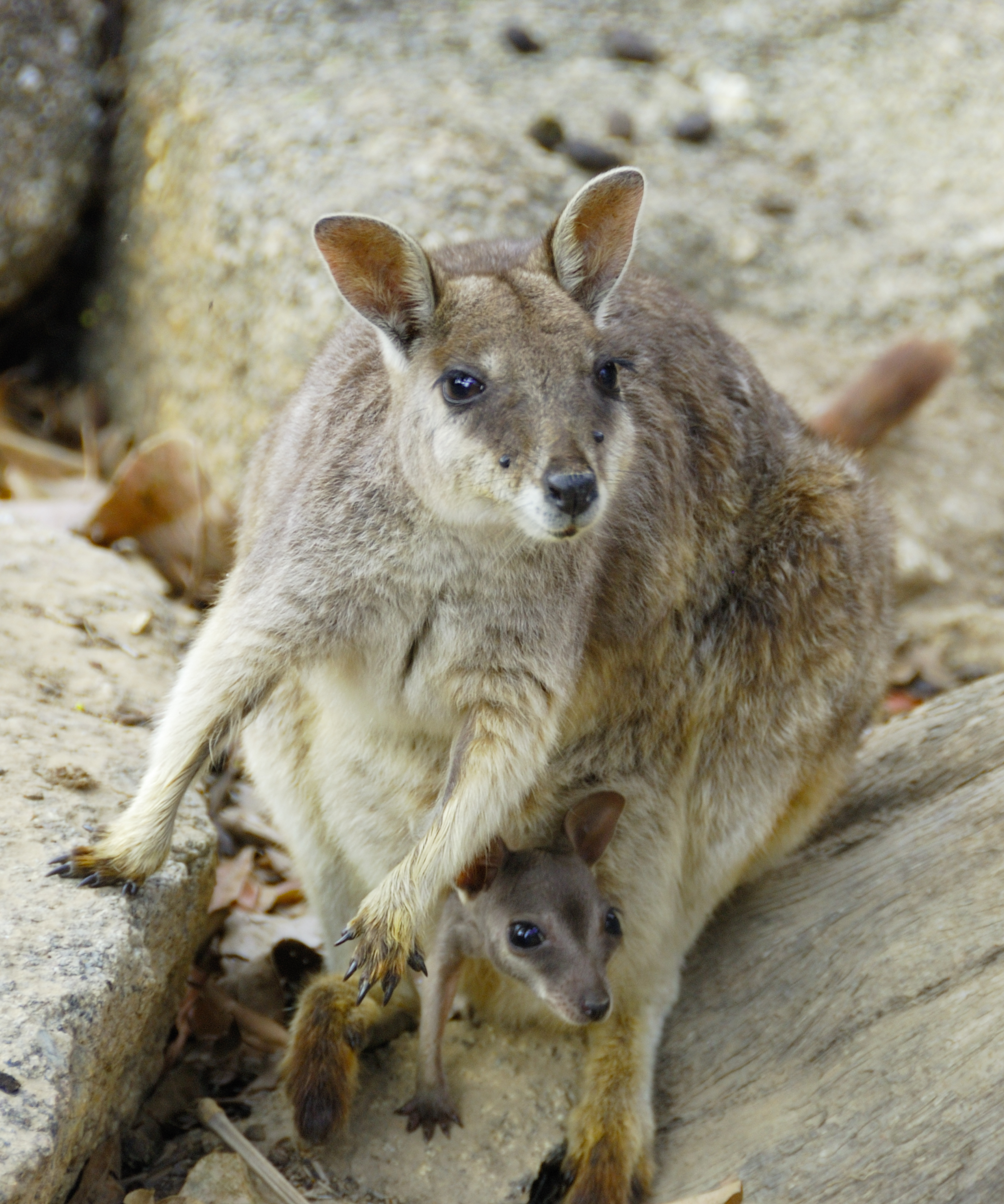
One of our sequencing approaches to play with at the moment is 10x Chromium linked read, assembled with Supernova. We’ve now done a bunch of different species, and they mostly come out pretty decent - and excellent value for money. As part of the Oz Mammals Genomics project, we are currently assembling several rock-wallabies. One of them, Petrogale mareeba has just broken our lab record for the most intact assembly - initial “pseudohaploid” stats:

  • Total length of sequences: 3,329,538,806
  • Max. length of sequences: 275,258,067
  • N50 length of sequences: 47,482,977
  • L50 count of sequences: 20
  • Gap (N) length: 40,183,160 (1.21%)

Over half of the 3.3 Gb genome is covered by just twenty scaffolds, at least 47.5 Mb in length - the longest is over 275 Mb! (We normally feel pretty happy to get an N50 of a few Mb.) Cuter than a cane toad too!


Photo credit: Richard.Fisher CC BY 2.0