Showing posts with label phylogenetics. Show all posts

Tuesday, 9 July 2024

New pre-print: The Genomics for Australian Plants (GAP) framework initiative – developing genomic resources for understanding the evolution and conservation of the Australian flora

The Bioplatforms Australia Genomics for Australian Plants (GAP) initiative aims to sequence and assemble representative genomes of Australia’s unique flora, which boasts over 24,000 native vascular plant species evolved over millions of years. The program brings together academic groups, herbaria and botanic gardens from across the country to build genomic capacity and create valuable resources for the classification, conservation and utilisation of Australian plants. We were lucky enough to sequence one of the first GAP species, the NSW Waratah. Now, the capstone paper outlining the project and its key findings from multiple species is out as a pre-print at EcoEvoRxiv:

Simpson L, Cantrill DJ, Byrne M, Allnutt TR, King GJ, Lum M, Al Bkhetan Z, Andrew R, Baker WJ, Barrett MD, Batley J, Berry O, Binks RM, Bragg JG, Broadhurst L, Brown G, Bruhl J, Edwards RJ, Ferguson S, Forest F, Gustafsson J, Hammer TA, Holmes GD, Jackson CJ, James EA, Jones A, Kersey PJ, Leitch IJ, Maurin O, McLay TGB, Murphy DJ, Nargar K, Nauheimer L, Sauquet H, Schmidt-Lebuhn AN, Shepherd KA, Syme AE, Waycott M, Wilson TC, Crayn DM (preprint): The Genomics for Australian Plants (GAP) framework initiative – developing genomic resources for understanding the evolution and conservation of the Australian flora. EcoEvoRxiv DOI: https://doi.org/10.32942/X2RP70

The generation and analysis of genome-scale data—genomics—is driving a rapid increase in plant biodiversity knowledge. However, the speed and complexity of technological advance in genomics presents challenges for its widescale use in evolutionary and conservation biology. Here, we introduce and describe a national-scale collaboration conceived to build genomic resources and capability for understanding the Australian flora: the Genomics for Australian Plants (GAP) Framework Initiative. We outline (a) the history of the project including the collaborative framework, partners, and funding; (b) GAP principles such as rigour in design, sample verification and documentation, data management, and data accessibility; and (c) the structure of the consortium and its four activity streams (reference genomes, phylogenomics, conservation genomics, and training), with the rationale and aims for each of them. We show, through discussion of its successes and challenges, the value of this multi-institutional consortium approach and the enablers, such as well-curated collections and national collaborative research infrastructure, all of which have led to a substantial increase in capacity and delivery of biodiversity knowledge outcomes.

The initiative is about more than just reference genomes, with core activity in phylogenomics, conservation genomics and training too. For more information on the project and the resources generated (with more to come), read the paper and/or visit the GAP website.

Monday, 8 August 2022

Senior Postdoc wanted for UWA Ocean Genomes Lab! (Closing soon)

The new Ocean Genomes Laboratory (part of the Minderoo OceanOmics Centre at the UWA Oceans Institute) is hiring a Level B postdoc in marine genomics. (Three-year fixed term full time role, or flexible working equivalent.)

This is a rare opportunity to work as part of a collaborative team in a high-profile state of the art genomics research facility dedicated to studying marine vertebrates. You should have a PhD in bioinformatics, computational biology, molecular genetics or genomics, plus an interest in marine vertebrates and postdoctoral experience in high throughput DNA sequencing and whole genome assembly. The lab is new and there is plenty of scope to shape its direction beyond the core mission creating a marine vertebrate reference genome library as part of the Vertebrate Genome Project. You will also have an important role in helping to supervise the lab staff and research team.

Closing date: 11:55pm AWST, Friday 12 August 2022

Please see the UWA job advert for more details.

About the team

The Minderoo OceanOmics Centre at UWA combines a joint Ocean Genomes Laboratory, an OceanOmics Laboratory, and a Computational Biology Program.

Equipped with the latest high-throughput sequencing technology, and in collaboration with global partners, the Ocean Genomes Laboratory will generate a comprehensive library of high-quality marine vertebrate reference genome assemblies. All reference genome data will be subject to rigorous QA/QC and all assemblies will be released publicly through open access.

The OceanOmics Centre will be located in the Bayliss Building on the UWA Crawley Campus, OceanOmics staff sharing the building with research and teaching staff primarily from the UWA School of Molecular Sciences and interacting with staff in the UWA Oceans Institute in the nearby IOMRC building.

About the opportunity

As a Research Fellow you will join a research group committed to applying modern molecular biological methods to marine research.

Using modern genomic approaches, you will undertake research on marine vertebrates, focussed on the production, QC and assembly of high-quality reference genome data. You will participate in the entire workflow from sample collection and processing, generating genomic sequence data in the laboratory using multiple modern genome sequencing technologies, with a focus on data processing, assembly, curation, analysis and dissemination.

In this unique role you will also be supported to develop your leadership skills. Working closely with the Centre’s UWA Principal Research Fellow, junior postdoctoral academics, the Centre’s Laboratory Manager, and diverse researchers from Minderoo Foundation you will contribute to decision making, oversee the work of technicians and PhD students and provide leadership in modern high-quality genome assembly production and publication.

Tuesday, 25 January 2022

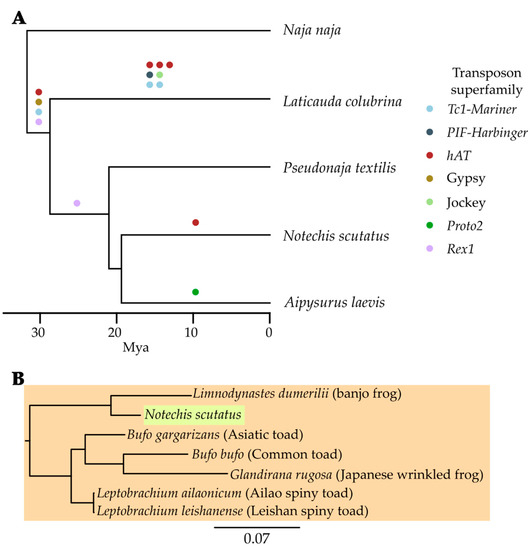
Horizontal transposon transfer and its implications for the ancestral ecology of hydrophiine snakes

The first of the BABS Genome papers has finally arrived, featuring our two 10x Genomics Supernova snake genomes. Such is the speed that genomics is moving, the snake assemblies themselves have moved on quite a bit since then and we hope to release chromosome-level versions soon. (The goalposts for a genome paper moved faster than they could be written up - always a challenge without dedicated researchers working on assemblies! Do get in touch if they’d be useful and we can collaborate.)

Rather than a pure genome paper, this paper makes use of our two elapid genomes to ask some interesting questions about possible horizontal transfer of transposable (mobile genetic) elements during the evolution of sea snakes - our two elapids provided good sister (mainland tiger snake) and outgroup (eastern brown snake) taxa for the olive sea snake, which was the focus of the study. It was doubly pleasing to collaborate on a transposable elements paper, as they were the subject of my PhD (albeit in bacteria, see here and here).

This paper is part of a special issue, Mobile Elements in Phylogenomic Reconstructions, and features some interesting examples of probable horiztonal transfer of mobile elements that provide insights into the evolutionary history of these species.


Galbraith JD, Ludington AJ, Sanders KL, Amos TG, Thomson VA, Enosi Tuipulotu D, Dunstan N, Edwards RJ, Suh A, Adelson DL (2022): Horizontal transposon transfer and its implications for the ancestral ecology of hydrophiine snakes. Genes 13(2):217. [Genes] [PDF] [bioRxiv]

Abstract

Transposable elements (TEs), also known as jumping genes, are sequences able to move or copy themselves within a genome. As TEs move throughout genomes they often act as a source of genetic novelty, hence understanding TE evolution within lineages may help in understanding environmental adaptation. Studies into the TE content of lineages of mammals such as bats have uncovered horizontal transposon transfer (HTT) into these lineages, with squamates often also containing the same TEs. Despite the repeated finding of HTT into squamates, little comparative research has examined the evolution of TEs within squamates. Here we examine a diverse family of Australo–Melanesian snakes (Hydrophiinae) to examine if the previously identified, order-wide pattern of variable TE content and activity holds true on a smaller scale. Hydrophiinae diverged from Asian elapids ~30 Mya and have since rapidly diversified into six amphibious, ~60 marine and ~100 terrestrial species that fill a broad range of ecological niches. We find TE diversity and expansion differs between hydrophiines and their Asian relatives and identify multiple HTTs into Hydrophiinae, including three likely transferred into the ancestral hydrophiine from fish. These HTT events provide the first tangible evidence that Hydrophiinae reached Australia from Asia via a marine route.

Friday, 4 December 2020

EdwardsLab at #AusEvo2020

If you missed his talk at ABACBS2020, Jack will be presenting today at the Australasian Evolution Society 2020 Conference about The role of gene duplication in the evolution of snake venoms. Two conference presentations in two weeks - not a bad way to prepare for your Honours viva post-submission. Well done, Jack!

Also, Kat Stuart will be presenting her work on invasive starlings in Zoom 2 at 13:00 AEDT. Kat’s talks are always great to listen to:

  • Katarina Stuart: What drives invasion success? Using historical museum samples to examine evolution in an invasive passerine.

Tuesday, 18 February 2020

Jack Clarke (Honours student)

Jack worked in the Edwards Lab in 2020 for his Honour years, researching the evolution of snake venoms using the lab’s de novo genome assemblies of two Australian snakes (Eastern brown snake and mainland tiger snake). His researched focused on phylogenetic analysis of venom gene families in order to understand how venom divergence has occurred in different branches of the snake lineage. The work focused on the role that tandem gene duplication events had played in the evolution of specific venom gene families and identified novel sites of tandem duplication shared across multiple snake species.

Jack holds a Bachelor of Advanced Science (Honours) (First Class) with majors in Bioinformatics and Genetics. He is currently completing his PhD at UNSW in collaboration with the Victor Chang institute.

[LinkedIn]

Friday, 1 November 2019

Phylogenetic Tree Rooting

Edwards RJ (2019): Phylogenetic Tree Rooting, In Encyclopedia of Bioinformatics and Computational Biology, Elsevier Volume 2, Pages 727-735. Science Direct

Abstract

A phylogenetic tree is a graphical representation of the evolutionary relationships between biological entities, usually sequences or species. Relationships between entities are captured by the topology (branching order) and amount of evolutionary change (branch lengths) between nodes. The role of the root is to add direction to these relationships and clearly define ancestry. This chapter will discuss if, when and why a phylogenetic tree should be rooted. Common rooting methods (midpoint and outgroup rooting) are introduced with comments on when to use them and how to recognize them in published trees.

Friday, 17 April 2015

Metabotropic glutamate receptors: modulators of context-dependent feeding behaviour in C. elegans

Dillon J, Franks CJ, Murray C, Edwards RJ, Calahorro F, Ishihara T, Katsura I, Holden-Dye L, O’Connor V (in press). Metabotropic glutamate receptors: modulators of context-dependent feeding behaviour in C. elegans. J Biol Chem. Apr 13. pii: jbc.M114.606608.

Abstract

Glutamatergic neurotransmission is evolutionarily conserved across animal phyla. A major class of glutamate receptors are the metabotropic glutamate receptors (mGluRs). In C. elegans three mGluR genes mgl-1, mgl-2 and mgl-3 are organised into three sub-groups, similar to their mammalian counterparts. Cellular reporters identified expression of the mgls in the nervous system of C. elegans and overlapping expression in the pharyngeal microcircuit that controls pharyngeal muscle activity and feeding behaviour. The overlapping expression of mgls within this circuit allowed investigation of receptor signalling per se and in the context of receptor interactions within a neural network that regulates feeding. We utilized the pharmacological manipulation of neuronally regulated pumping of the pharyngeal muscle in wild type and mutants to investigate mgl function. This defined a net mgl-1 dependent inhibition of pharyngeal pumping which is modulated by mgl-3 excitation. Optogenetic activation of the pharyngeal glutamatergic inputs combined with electrophysiological recordings from the isolated pharyngeal preparations provided further evidence for a presynaptic mgl-1 dependent regulation of pharyngeal activity. Analysis of mgl-1, mgl-2 and mgl-3 mutant feeding behaviour in the intact organism after acute food removal identified a significant role for mgl-1 in the regulation of an adaptive feeding response. Our data describes the molecular and cellular organisation of mgl-1, mgl-2 and mgl-3. Pharmacological analysis identified that in these paradigms mgl-1 and mgl-3, but not mgl-2, can modulate the pharyngeal microcircuit. Behavioural analysis identified mgl-1 as a significant determinant of the glutamate-dependent modulation of feeding, further highlighting the significance of mGluRs in complex C. elegans behaviour.

PMID: 25869139

Monday, 11 August 2014

UPGMA walkthrough PowerPoint now on GOBLET

A couple of years ago, I made a UPGMA walkthrough for an undergrad course. The slides were available on request but can now be found on GOBLET (the Global Organisation for Bioinformatics Learning, Education & Training website).