Showing posts with label depthkopy. Show all posts

Tuesday, 17 December 2024

#AusEvol2024 - Depth-based correction of gene duplications and losses in genome assemblies

The Australasian Evolution Society conference has always been one of my favourites, due to its laid back culture of inclusivity and kindness. (And low cost!) It therefore feels quite fitting that my last conference as an Aussie academic was AES2024.

This talk was a bit of an update from my AES2021 presentation. This showcased some of the latest additions to DepthKopy, including depth-based copy number correction of genome features, such as rDNA genes, repeat families, or multicopy genes. This includes a feature that classifies multicopy “Duplicated” genes identified by BUSCO as true (biological) or false (artefactual) duplicates. TL/DR version: analysis of draft genome assemblies for 45 species of fish across five different depths/qualities indicates that DepthKopy can correct the copy number and total length of multicopy features to within 10% of the true number. (The lower-quality raw assemblies ranged from a 30% under-estimate to a 60% over-estimate.)

This will be of most importance when low quality draft genomes are included in a comparative genomics analysis. However, even the best genome assemblies appear to have some “collapsed” or duplicated loci where the copy number in the assembly does not accurately reflect the copy number in the genome. DepthKopy is useful for exploring the magnitude of such disparities, and can help to identify and correct specific disrepancies in genes or features of interest.

Thursday, 19 September 2024

#PAGAustralia Poster 14: Synteny-Guided Semi-Automated Curation of Chromosome-Level Genome Assemblies

If you are attending PAG Australia 2024, come and have a chat at Poster 14 about easing the burden of chromosome-level assembly curation.

Abstract Text

Reference genomes are fundamental resources that underpin research across most aspects of modern biology. Technological improvements in the length and accuracy of long-read sequencing platforms, combined with Hi-C proximity ligation sequencing, has enabled the routine generation of highly contiguous phased assemblies, scaffolded to chromosome-level. Nevertheless, automated generation of perfect gapless “telomere-to-telomere” assemblies remains out of reach for most eukaryotic organisms. Scaffolding errors and false duplications can still occur, and assembly curation is now the main bottleneck for large-scale assembly projects. Here, I present a streamlined data workflow and scaffolding assessment for high-throughput manual curation of chromosome-level genome assemblies. Synteny between haplotypes, or closely related species, is combined with read mapping to orient, pair and visualise assembled chromosomes. Assembly gaps are classified according to scaffolding confidence, highlighting candidates for simple scaffolding corrections, such as inversions. Synteny visualisation, gap classification, and HiC contact maps are then combined to identify and document scaffolding edits with increased speed, precision and confidence. This accelerates the production of curated chromosome-level assemblies, and enables the identification of regions of the assembly that may require further attention. Individual tools used in the workflow (ChromSyn, Telociraptor, SynBad, PAFScaff, DepthKopy and DepthCharge) are available at https://github.com/slimsuite/.

Friday, 14 January 2022

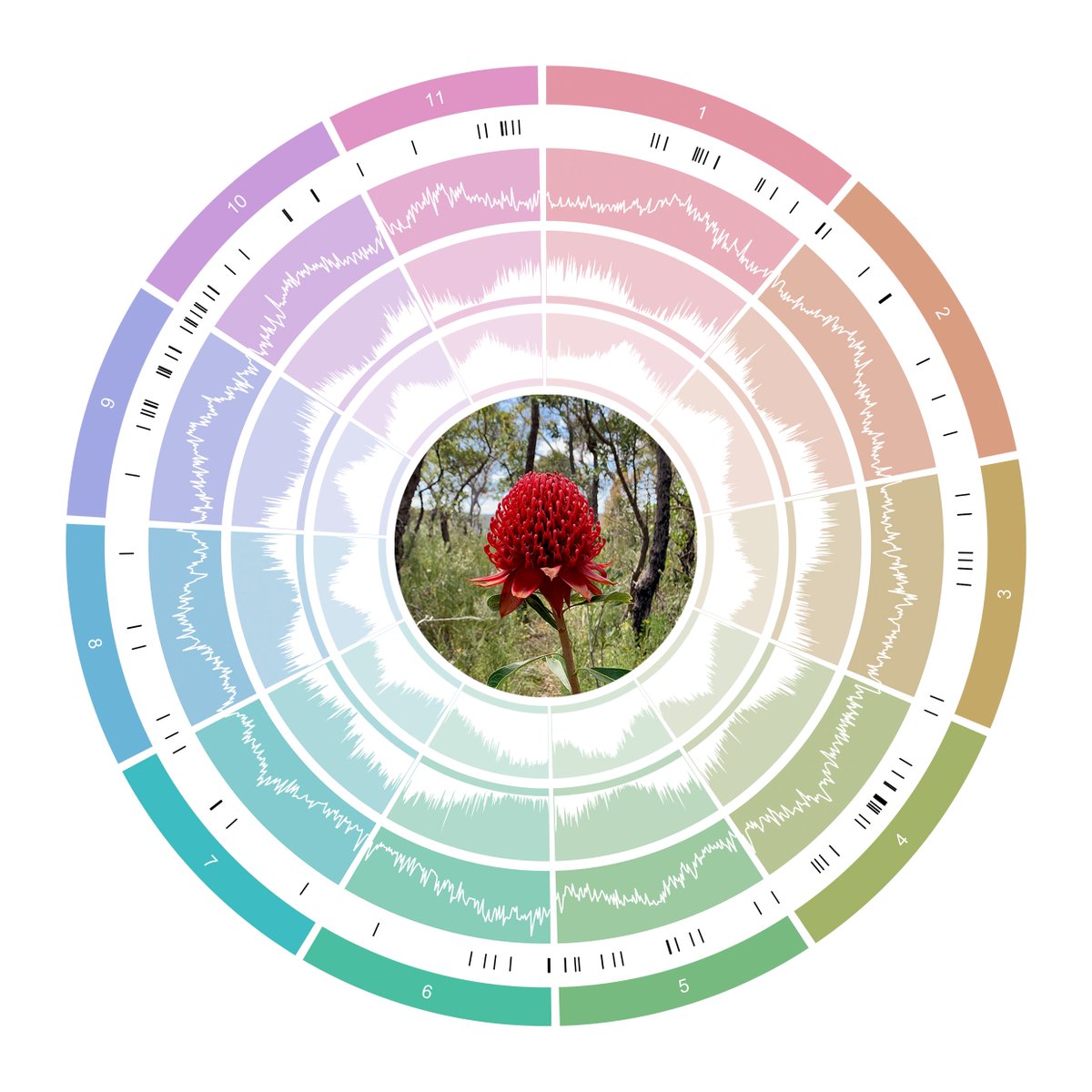
The Waratah genome paper is out!

The final version of the waratah genome paper now out in Molecular Ecology Resources. This was a fun collaboration with the Royal Botanic Gardens and Domain Trust as one of the pilot genomes for BioPlatforms Australia’s Genomics for Australian Plants (GAP) initiative.

You can read the press release here, or our piece in the Conversation, We’ve unveiled the waratah’s genetic secrets, helping preserve this Australian icon for the future.

In this paper, we present a chromosome-level assembly for the NSW State Floral Emblem, the New South Wales waratah, Telopea speciosissima. This joins macadamia as the 2nd reference genome for the Proteaceae family & should help future studies for the remaining ca. 1700 species.

The genome was assembled from a ONT chassis, scaffolded with 10x Genomics linked reads and Phase Genomics HiC - made possible thanks to quality data from AGRF and the Ramaciotti Centre for Genomics. The final assembly was chromosome-level, with 94.1% on the 11 chromosomes (2n = 22).

As well as the assembly itself, the paper presents a three genomics tools that we hope will be helpful for other assemblies:

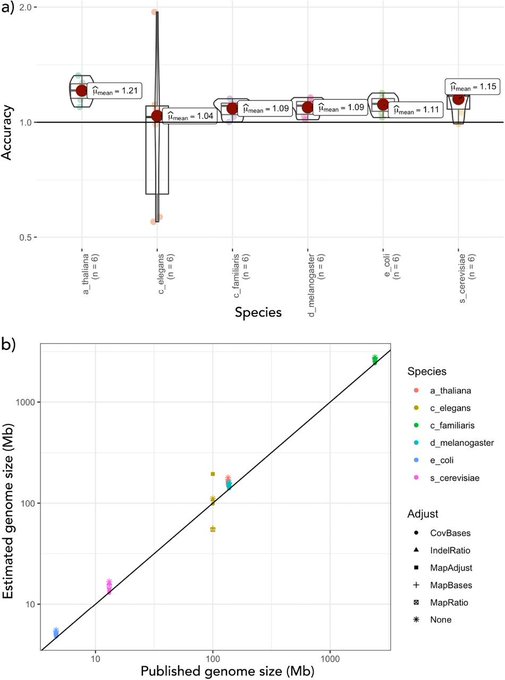
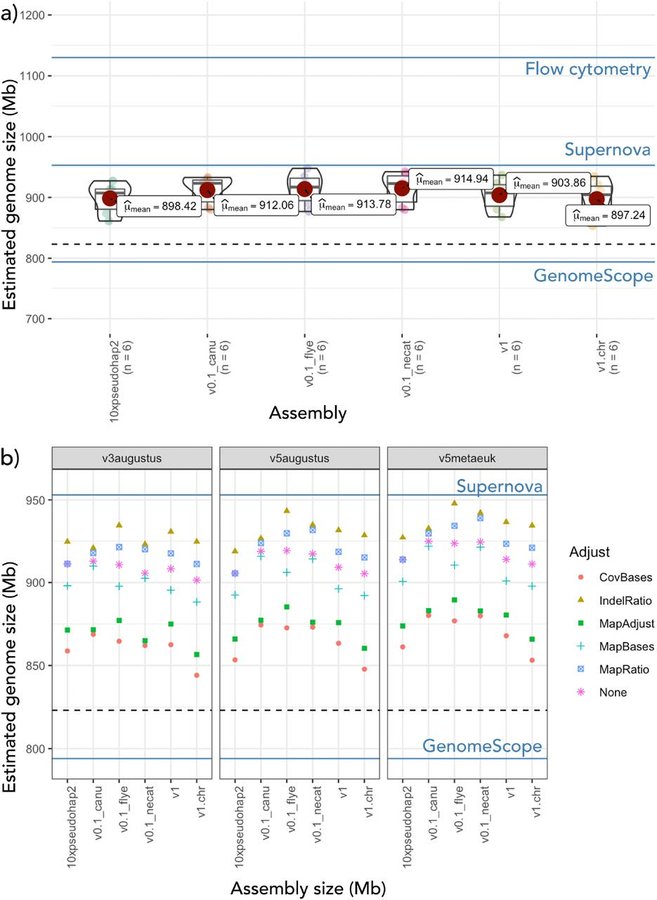
1. DepthSizer uses long-read depths and BUSCO predictions to estimate genome size. We estimated the waratah genome to be ca. 900 Mbp - bigger than kmer estimates, but smaller than flow cytometry of Tasmanian waratah.
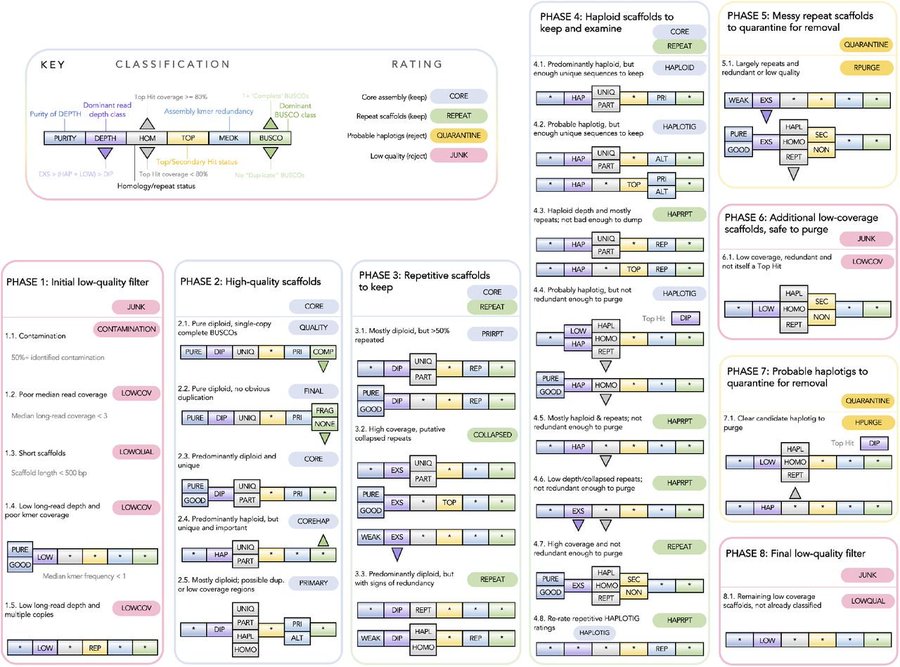
2. Diploidocus builds on Purge Haplotigs, combining read depths, kmer frequencies & BUSCO predictions to classify and curate/filter assembly scaffolds. This decreases false duplications & contamination, and flags collapsed repeats for closer inspection.
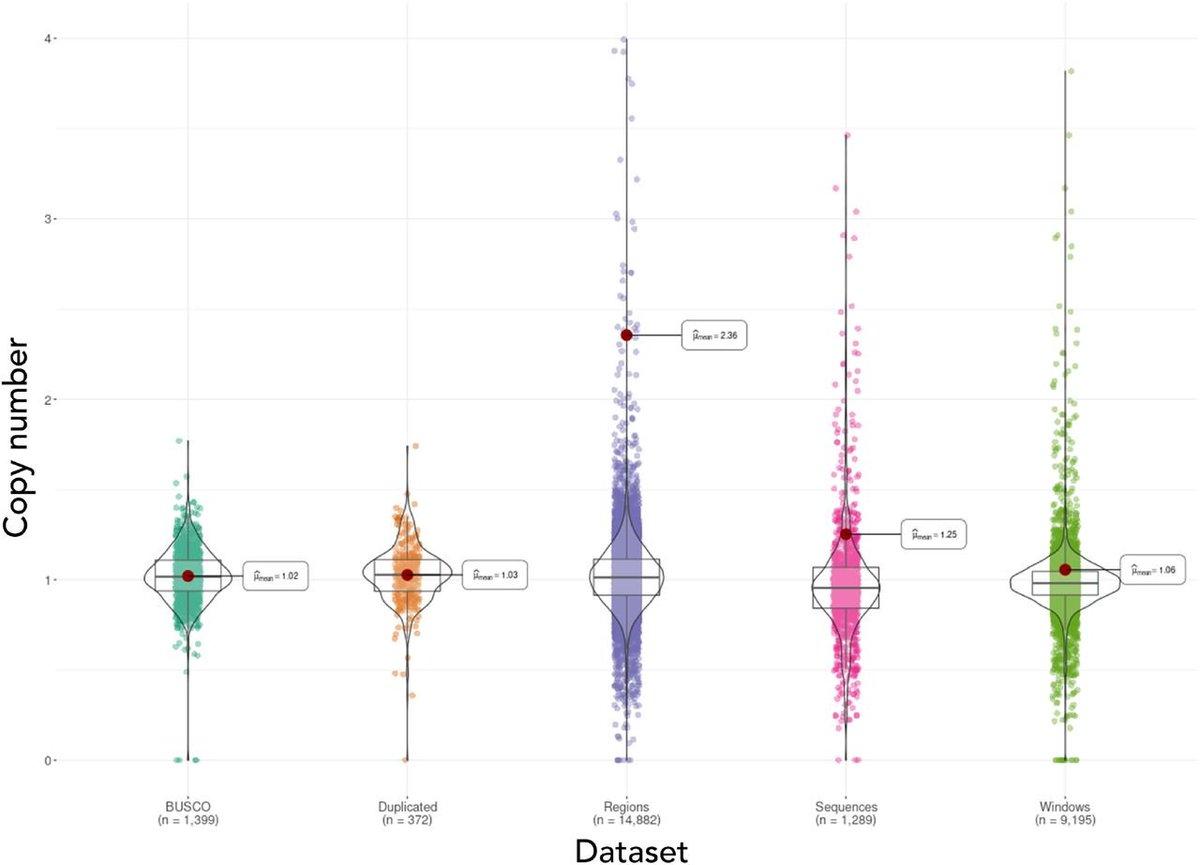
3. DepthKopy uses BUSCO Complete genes to establish sequencing depth (like DepthSizer) and then estimates copy number for regions (e.g. genes), scaffolds & sliding windows of the assembly. This showed that most “Duplicated” BUSCOs are real duplicates.

Chen SH, Rossetto M, van der Merwe M, Lu-Irving P, Yap JS, Sauquet H, Bourke G, Amos TG, Bragg JG & Edwards RJ (accepted): Chromosome-level de novo genome assembly of Telopea speciosissima (New South Wales waratah) using long-reads, linked-reads and Hi-C. Molecular Ecology Resources.
[Mol Ecol Res] [bioRxiv]

Abstract

Telopea speciosissima, the New South Wales waratah, is an Australian endemic woody shrub in the family Proteaceae. Waratahs have great potential as a model clade to better understand processes of speciation, introgression and adaptation, and are significant from a horticultural perspective. Here, we report the first chromosome-level genome for T. speciosissima. Combining Oxford Nanopore long-reads, 10x Genomics Chromium linked-reads and Hi-C data, the assembly spans 823 Mb (scaffold N50 of 69.0 Mb) with 97.8% of Embryophyta BUSCOs “Complete”. We present a new method in Diploidocus (https://github.com/slimsuite/diploidocus) for classifying, curating and QC-filtering scaffolds, which combines read depths, k-mer frequencies and BUSCO predictions. We also present a new tool, DepthSizer (https://github.com/slimsuite/depthsizer), for genome size estimation from the read depth of single-copy orthologues and estimate the genome size to be approximately 900 Mb. The largest 11 scaffolds contained 94.1% of the assembly, conforming to the expected number of chromosomes (2n = 22). Genome annotation predicted 40,158 protein-coding genes, 351 rRNAs and 728 tRNAs. We investigated CYCLOIDEA (CYC) genes, which have a role in determination of floral symmetry, and confirm the presence of two copies in the genome. Read depth analysis of 180 “Duplicated” BUSCO genes using a new tool, DepthKopy (https://github.com/slimsuite/depthkopy), suggests almost all are real duplications, increasing confidence in the annotation and highlighting a possible need to revise the BUSCO set for this lineage. The chromosome-level T. speciosissima reference genome (Tspe_v1) provides an important new genomic resource of Proteaceae to support the conservation of flora in Australia and further afield.

If you want a read and don’t have access, please get it touch or check out the bioRxiv preprint.

Thursday, 2 December 2021

EdwardsLab at Australasian Evolution Society #AUSEVO2021

Look out for some interesting talks by Edwards Lab members at this year’s Australasian Evolution Society 2021 conference, starting today:

Thursday 2nd December: 3-minute talks | 1130-1230

Kelton Cheung - Analysis of mitochondrial DNA reveals significant genetic diversity in invasive Australian cane toads

Kelton Cheung, Mark Richardson, Richard Edwards & Lee Ann Rollins

Mitochondrial DNA haplotype patterns across the native and invaded ranges can reveal the history and evolutionary trajectory of invasions. The invasion of Australia by the cane toad (Rhinella marina) has accelerated as it expanded westward. Despite this success, previous studies reported no mitochondrial genetic diversity in Australia. Here, we assembled a complete mitochondrial reference genome and haplotyped toads (N=119) from the native range and two introduced populations (Hawai’i and Australia), using whole genome and RNA-seq data. The complete R. marina mitochondrial genome consists of 18,152 base pairs with no significant gene arrangement as compared to other bufonid species. Although native range genetic diversity was much higher than that of the introduced ranges, we identified 29 haplotypes in Australia. While we did find evidence of founder effects following introduction, our results suggest there is significant genetic diversity within Australia, which may assist adaptation and invasion success in this species.


Thursday 2nd December: Selection 1 | 1415-1430

Katarina Stuart - A genetic perspective on rapid adaptation in the globally invasive European starling (Sturnus vulgaris)

Abstract coming soon…


Thursday 2nd December: Biogeography and phylogenetics | 1530-1545

Richard Edwards - DepthKopy: copy number prediction using single-copy long-read depth profiles

Richard J Edwards, Stephanie H Chen, Katarina C Stuart, Mark M Tanaka & Jason G Bragg

Gene duplication, followed by functional divergence of gene copies, is a fundamental component of genetic adaption and the evolution of novelty. Increasingly, evolutionary studies make use of the ever-expanding number of high-quality genome assemblies to characterise patterns of gene gain and loss. However, even reference genomes of the highest quality can experience assembly errors at tandemly repeated gene loci, resulting in incorrect inference of gene duplication patterns. Here, we present DepthKopy (https://github.com/slimsuite/depthkopy), which estimates the copy number for a gene, region or sequence of interest, using an estimate of single-copy sequencing depth derived from complete BUSCO genes. This is useful for identifying haplotigs, and collapsed repeat regions during genome assembly curation. Critically, for evolutionary studies of gene families, DepthKopy can identify genes for which the number of genes in the assembly does not seem to match the genome.


Friday 3rd December: Climate change and temperature | 1330-1345

Collin Ahrens - Genomic constraints of drought adaptation

Abstract coming soon…

Wednesday, 24 November 2021

#ABACBS2021 Lightning talk - DepthSizer and DepthKopy: genome size and copy number prediction using single-copy long-read depth profiles

Tune in for the ABACBS 2021 lightning talks this morning to hear about our applications of long reads to genome size and copy number prediction. For more information, you can read the NSW Waratah genome paper pre-print or visit the GitHub pages for DepthSizer and DepthKopy.

Richard J Edwards, Stephanie H Chen, Katarina C Stuart, Mark M Tanaka, Jason G Bragg.

DepthSizer and DepthKopy: genome size and copy number prediction using single-copy long-read depth profiles

A fundamental part of any genome project is establishing the genome size of the organism being sequenced. The gold standard for genome size measurement is flow cytometry, but this is not available to all groups and can give surprisingly variable results. Popular bioinformatic approaches predict genome size using kmer frequency profiles from high-accuracy (e.g. illumina or hifi) sequencing reads, or the mean depth of coverage reads mapped to an assembly. Both of these approaches can be adversely affected by repetitive regions of the genome. Mean sequencing depth is also highly reliant on assembly completeness.

Here, we present DepthSizer (https://github.com/slimsuite/depthsizer), which refines this approach by estimating sequencing depth based on single-copy complete BUSCO genes. DepthSizer works on the principle that genuine single-copy regions will tend towards the same, true, single-copy read depth. In contrast, assembly errors, collapsed repeats within those genes, or incorrect BUSCO predictions, will give inconsistent read depth deviations. The modal read depth across single-copy BUSCO genes, calculated from a depth density profile of these regions, should therefore provide a good estimate of the true depth of coverage. The method is benchmarked on model organism data and corrections for possible contamination, biases/inconsistencies in read mapping and/or raw read insertion/deletion error profiles are discussed. We also present DepthKopy (https://github.com/slimsuite/depthkopy), which uses the same read depth approach to estimate the copy number of assembly regions. This can be useful for identifying haplotigs, and collapsed repeat regions.

Keywords: BUSCO, Genome Assembly, Genomics, ONT, PacBio, copy number variants
